Culture & heritage
Cultural heritage represents the irreplaceable thread connecting us to our past, shaping our present identity, and guiding future generations. Yet this precious inheritance—whether a centuries-old building, a traditional craft technique, or an elder’s oral testimony—faces unprecedented threats. Climate change accelerates physical decay, globalization erodes traditional knowledge, and ethical questions about ownership and access grow increasingly complex.
Preserving culture and heritage requires far more than good intentions. It demands specialized knowledge spanning diverse fields: sustainable funding models, scientifically-informed conservation techniques, digital archiving protocols, cross-cultural communication skills, and ethical frameworks for contested collections. This article introduces the fundamental challenges and practical approaches that define contemporary heritage stewardship, offering a comprehensive foundation for anyone committed to safeguarding our shared cultural legacy.
Funding and Economic Sustainability of Heritage Sites
Financial sustainability remains the most persistent challenge facing heritage preservation. While government grants have traditionally supported conservation efforts, relying solely on public funding creates vulnerability to political shifts and budget cuts. Diversified revenue streams have become essential for long-term site survival.
Heritage tourism offers significant potential when managed thoughtfully. A well-preserved historic district can generate substantial local economic activity—creating jobs for guides, artisans, and hospitality workers while funding ongoing maintenance. However, success requires balancing visitor access with preservation needs. Overcrowding can accelerate deterioration of fragile structures and artifacts.
Digital technologies are reshaping accessibility and revenue models. Virtual tours enable global audiences to experience sites remotely, generating income without physical wear. These digital offerings particularly benefit mobility-impaired visitors and educational institutions. Some sites successfully operate hybrid models: limited physical access to protect vulnerable areas, supplemented by high-quality digital experiences that reach broader audiences.
Private sponsorship and philanthropic partnerships complement public funding, though they require careful management. Corporate sponsors may seek promotional benefits that conflict with conservation priorities. The most successful partnerships establish clear agreements that prioritize heritage integrity while acknowledging sponsor contributions appropriately.
Physical Conservation in a Changing Climate
Climate change has transformed from distant threat to immediate crisis for heritage sites worldwide. Accelerated erosion, flooding, extreme temperatures, and shifting precipitation patterns are destabilizing structures that survived centuries of normal weathering.
Effective climate adaptation begins with diagnostic monitoring. Regular structural assessments identify emerging problems before they become catastrophic. Advanced techniques like laser scanning and thermal imaging reveal internal stresses invisible to visual inspection. Many historic sites now maintain continuous monitoring systems that track moisture levels, foundation movement, and environmental conditions.
Protective interventions range from temporary to permanent solutions, each with distinct trade-offs. Temporary barriers—such as sandbags during flood season—preserve aesthetic integrity but require recurring labor and storage. Permanent modifications like improved drainage or climate-controlled environments offer lasting protection but may alter historic character. Conservation professionals must weigh preservation against authenticity in each context.
Insurance presents growing challenges as climate risks intensify. Some insurers refuse coverage for sites in vulnerable locations or demand prohibitively expensive premiums. This forces heritage managers to develop emergency protocols for artifact evacuation, prioritizing which irreplaceable objects to save first during disasters—a tragic calculus no steward wants to face.
Authentic Materials and Restoration Techniques
Restoration authenticity depends critically on sourcing period-appropriate materials. Modern substitutes may look similar initially but often weather differently, creating visual inconsistency and potential structural incompatibility. A historic brick facade repaired with contemporary bricks, for example, may develop cracks where old and new materials expand at different rates.
Material provenance verification requires detective work. Restoration specialists analyze composition, manufacturing techniques, and aging patterns to source compatible materials. This might involve locating salvaged elements from demolished buildings of the same era, commissioning artisans to reproduce materials using traditional methods, or chemically matching mortar mixes to original formulations.
The salvage versus reproduction debate balances multiple factors:
- Salvaged materials offer authentic aging and composition but limited availability and uncertain condition
- Reproductions provide consistency and quantity but require skilled craftspeople and may lack authentic weathering
- Hybrid approaches use salvage for visible areas and reproductions for structural elements
Supply chain constraints compound these challenges. Specialized materials may require months of lead time, and skilled artisans capable of traditional techniques grow increasingly rare. Budget planning must account for scarcity premiums—authentic lime mortar or hand-forged ironwork costs substantially more than modern equivalents, but this investment preserves historical integrity.
Preserving Intangible Heritage and Living Memory
Not all cultural heritage exists in physical form. Intangible heritage—stories, songs, recipes, social practices, and traditional knowledge—resides in human memory and lived experience. This knowledge disappears when its bearers pass away, making preservation efforts time-sensitive and deeply personal.
Oral History and Storytelling
Family histories and community memories provide irreplaceable perspectives on cultural continuity. Conducting effective interviews with elderly relatives requires thoughtful preparation. Create comfortable settings, ask open-ended questions, and allow digressions—seemingly tangential stories often contain valuable cultural context. Recording not just facts but manner of speaking, dialect, and emotional tone captures richer cultural texture.
Technical quality matters for long-term usability. While smartphones offer convenience, dedicated audio recorders provide superior sound quality crucial for transcription and archival preservation. Position microphones carefully to minimize background noise, and always create backup recordings—a single technical failure can erase irreplaceable testimony.
Digital Archiving Best Practices
Digital files offer remarkable preservation potential but face unique vulnerabilities. Data loss from hardware failure, file corruption, or format obsolescence threatens digital archives. The 3-2-1 backup rule provides essential protection: maintain three copies on two different media types, with one stored off-site.
Organization and metadata determine long-term accessibility. Audio files labeled only “Interview_01” become meaningless within months. Implement systematic naming conventions and tagging schemes that include date, subject, interviewer, and content keywords. This organizational foundation transforms raw recordings into searchable, usable archives for future researchers and family members.
Safeguarding Endangered Craft Skills
Traditional crafts embody cultural knowledge accumulated across generations—techniques for weaving, metalworking, woodcarving, or ceramic production that define cultural identity. Yet many crafts face extinction as practitioners age without successors, their skills containing what experts call tacit knowledge: understanding gained through experience that resists written documentation.
The Apprenticeship Model
Apprenticeship remains the most effective method for transmitting embodied craft knowledge. Unlike classroom instruction, apprenticeship immerses learners in practical problem-solving alongside master craftspeople. A ceramicist doesn’t just learn clay chemistry; they develop intuitive understanding of how clay feels at proper consistency, how kiln temperature affects glaze, how subtle hand movements shape form.
Successful apprenticeship programs require careful candidate screening. Beyond basic aptitude, look for resilience and patience—traditional crafts demand years of practice before achieving mastery. The most committed apprentices demonstrate intrinsic motivation beyond economic incentives, understanding they’re preserving cultural legacy.
Knowledge Documentation
While apprenticeship transmits practical skills most effectively, supplementary documentation preserves knowledge against unexpected loss. Video documentation captures hand positions, tool handling, and sequential processes that text alone cannot convey. Written notes record proportions, timing, and material specifications. This multi-format approach creates safety nets ensuring knowledge survives even if apprenticeship chains break.
Intellectual property protection presents complex considerations. Traditional knowledge often belongs collectively to communities rather than individuals. Agreements should clarify how documented techniques may be shared, taught, or commercialized, respecting cultural ownership while enabling knowledge transmission.
Cross-Cultural Collaboration in Heritage Work
Heritage preservation increasingly involves international partnerships and multicultural teams. A restoration project might unite architects from one country with traditional craftspeople from another, or indigenous communities might collaborate with museum professionals on collection interpretation. These collaborations generate valuable knowledge exchange but require skillful cross-cultural communication.
High-context versus low-context cultural differences significantly impact communication effectiveness. High-context cultures (common in Asia, Middle East, and Latin America) rely heavily on implicit understanding, relationship history, and non-verbal cues. Low-context cultures (prevalent in Northern Europe and North America) favor explicit, direct communication. Misunderstandings arise when team members misinterpret these different styles as rudeness or inefficiency rather than cultural variance.
Practical challenges like conflicting time zones and language barriers require thoughtful tool selection. Asynchronous communication platforms allow team members to contribute at convenient times, while video calls with real-time translation enable nuanced discussion. The key is establishing clear communication protocols that respect everyone’s working patterns and linguistic comfort levels.
Inclusive practices prevent alienation of minority culture team members. This means more than translation—it requires actively soliciting diverse perspectives, acknowledging different knowledge systems as equally valid, and adapting feedback delivery to cultural norms around directness, hierarchy, and public critique.
Ethics, Provenance, and Repatriation
Museums and private collections worldwide hold objects acquired through colonial exploitation, wartime looting, or coercive transactions. Growing awareness of these problematic histories has intensified demands for repatriation—returning cultural objects to their communities of origin. These discussions reshape fundamental questions about ownership, access, and institutional responsibility.
Understanding Provenance Research
Ethical collection management begins with understanding how objects entered collections. Provenance research traces ownership history, identifying gaps that may indicate problematic acquisition. A ceremonial object purchased in the 1920s “from a private collector” might have been stolen during colonial occupation. Documentation gaps aren’t proof of wrongdoing but warrant investigation.
This research often reveals uncomfortable truths about institutional histories. Museums built on Enlightenment ideals of universal human knowledge frequently acquired collections through decidedly non-enlightened means. Confronting these histories requires institutional courage and commitment to truth over reputation management.
Building Equitable Partnerships
Repatriation discussions demand genuine dialogue, not institutional defensiveness. Building trust with source communities means acknowledging power imbalances, listening without predetermined outcomes, and recognizing communities’ authority over their cultural heritage. Return isn’t the only possible outcome—some communities prefer long-term loans that maintain cultural connections while enabling broader educational access.
Organizations should prepare for intense public attention. Repatriation cases often attract media coverage and strong opinions. Transparent communication about decision-making processes, consultation partners, and ethical reasoning helps navigate these conversations constructively. The goal isn’t avoiding controversy but handling it with integrity and respect for all stakeholders.
Culture and heritage preservation ultimately serves human flourishing—connecting us to identity, meaning, and community across time. Whether you’re drawn to the tangible challenges of structural conservation, the urgency of documenting endangered knowledge, or the complex ethics of collection management, each aspect of this work contributes to safeguarding our collective inheritance. The field demands diverse skills and perspectives, offering meaningful engagement for anyone committed to ensuring that future generations inherit the cultural richness that shapes human experience.
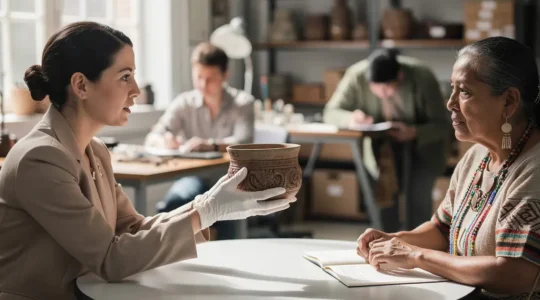
How to Handle Repatriation Requests for Contested Artifacts Transparently?
The true challenge of repatriation is not legal defense but a deficit in moral authority; the solution lies in building a proactive diplomatic framework based on radical transparency. Legal ownership is no longer a sufficient defense against public campaigns demanding…
Read more
How to Source Authentic Reclaimed Materials for a 19th-Century Restoration?
Sourcing for heritage projects isn’t a treasure hunt; it’s a calculated process of risk mitigation where material science meets modern compliance. Authenticity requires forensic validation, as chemically aged new wood often masquerades as genuine reclaimed timber. Structural integrity is paramount;…
Read more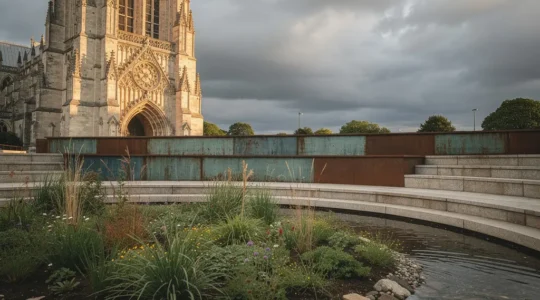
How to Retrofit Historic Monuments to Withstand Increasing Flood Risks?
Effective flood adaptation for heritage sites demands moving beyond brute-force barriers to a diagnostic-led strategy that enhances inherent resilience without sacrificing aesthetic integrity. Interventions must be preceded by material analysis and predictive digital modeling to target vulnerabilities. Solutions should prioritize…
Read more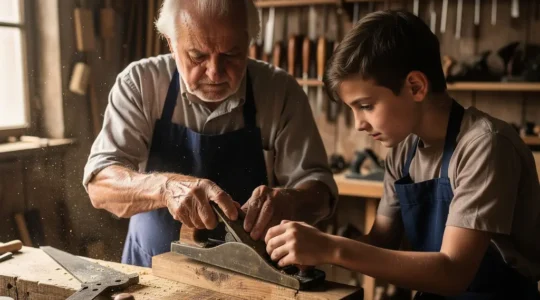
How to Find and Train an Apprentice to Save Your Dying Craft?
Passing on your craft isn’t just about teaching; it’s a high-stakes legacy transfer that requires strategic systems, not just good intentions. The most critical skills—muscle memory and intuition—cannot be written down and demand structured, non-verbal teaching methods. Without airtight, specific…
Read more
How to Record and Archive Family Oral Histories Before They Are Lost?
Preserving family history is more than hitting ‘record’; it’s an urgent archival mission to combat digital decay and capture a person’s irreplaceable “audio DNA.” The unique emotional data is in the voice itself—its cadence, pauses, and laughter—which photos cannot capture….
Read more
How to Lead a Team Across 3 Continents Without Cultural Misunderstandings?
Leading a global team successfully isn’t about memorizing etiquette rules; it’s about designing intentional communication systems that build clarity and psychological safety. Cultural differences in communication (direct vs. indirect) are a primary source of conflict, but can be managed with…
Read more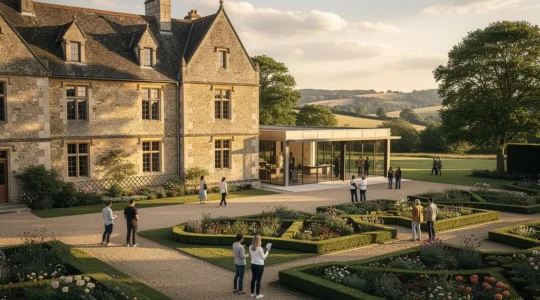
How to Generate Sustainable Revenue for Heritage Sites with Under 10,000 Visitors?
The key to financial survival for small heritage sites is to stop thinking like a caretaker and start acting like a heritage entrepreneur. Traditional funding like grants is unstable; a diversified model blending digital products, sponsorships, and community investment is…
Read more