Garden design
Garden design is far more than choosing attractive plants and arranging them pleasingly. It’s a multifaceted discipline that blends artistry with ecology, engineering with horticulture, and personal vision with environmental stewardship. Whether you’re transforming a compact urban balcony into a productive edible oasis or reclaiming a suburban lot depleted by years of neglect, thoughtful design decisions create outdoor spaces that are beautiful, functional, and resilient.
The most successful gardens emerge from understanding six foundational pillars: the living soil that nourishes everything above it, the strategic use of plants and structures to define space and privacy, the vital relationships between native flora and local fauna, the creative techniques that maximize productivity in confined areas, the illumination that extends garden enjoyment beyond daylight hours, and the critical management of water movement across your landscape. Each element influences the others, creating an interconnected system where improvements in one area often yield benefits throughout your entire outdoor space.
Building Healthy Soil: The Foundation of Every Garden
Think of soil as the invisible architecture beneath your garden—a living ecosystem housing billions of microorganisms that determine whether your plants merely survive or truly thrive. Depleted gardens, often characterized by compacted earth, poor drainage, and stunted plant growth, are remarkably common in residential landscapes that have endured years of conventional maintenance or construction disturbance.
Understanding What Lives Beneath
Before amending soil, you need to know what you’re working with. Soil pH and composition testing reveals the chemical environment your plants experience and identifies specific deficiencies or imbalances. A simple test measuring pH (acidity or alkalinity), nitrogen, phosphorus, and potassium levels costs little but provides invaluable guidance. Most vegetables and ornamentals prefer a slightly acidic to neutral pH between 6.0 and 7.0, while blueberries and azaleas thrive in more acidic conditions around 4.5 to 5.5.
Soil composition—the ratio of sand, silt, and clay—affects water retention and nutrient availability. Clay soils hold water but drain poorly and compact easily, while sandy soils drain rapidly but struggle to retain nutrients. The ideal loam combines all three particles, creating structure that balances drainage with moisture retention.
Regenerating Depleted Gardens
Rebuilding soil health requires patience and organic matter—lots of it. Organic amendments like compost, aged manure, leaf mold, and worm castings introduce both nutrients and beneficial microorganisms. Each amendment offers distinct advantages:
- Compost: Balanced nutrition, improves structure in both clay and sandy soils, introduces diverse microbial life
- Aged manure: High nitrogen content, excellent for heavy feeders like tomatoes and squash
- Leaf mold: Improves water retention, particularly beneficial for sandy soils, slow-release nutrients
- Worm castings: Concentrated nutrients, enhances beneficial bacterial populations, gentle enough for direct seed contact
Avoiding chemical fertilizer dependency means building a self-sustaining soil ecosystem rather than creating plants addicted to synthetic inputs. Chemical fertilizers provide an immediate nutrient boost but do nothing to improve soil structure or microbial diversity. Over time, this approach actually degrades soil health, requiring ever-increasing applications to maintain the same results.
Protecting Soil Structure
Preventing tillage damage is equally important as adding amendments. While tilling seems productive, excessive or poorly timed cultivation destroys soil aggregates, disrupts fungal networks, and brings dormant weed seeds to the surface. No-till or minimal-till approaches preserve soil structure and microbial communities. When establishing new beds, consider the lasagna method: layering cardboard, compost, and mulch to smother existing vegetation while building fertile soil.
Sequencing cover crops—plants grown specifically to improve soil rather than for harvest—represents an advanced regenerative technique. A winter cover of crimson clover fixes atmospheric nitrogen, while deep-rooted daikon radishes break up compaction. Buckwheat suppresses weeds during summer fallow periods, and cereal rye prevents erosion on slopes during winter months.
Creating Privacy and Structure in Your Outdoor Space
Privacy transforms a garden from a visible display into a personal sanctuary. For suburban lots where neighboring homes sit mere meters away, strategic screening becomes essential for comfortable outdoor living. The challenge lies in balancing the desire for seclusion with practical constraints like legal height restrictions, maintenance requirements, and the need to preserve light and air circulation.
Plant-Based Screening Solutions
Fast-growing screening plants offer the quickest path to privacy, though speed often comes with tradeoffs. Bamboo species can create a dense barrier within two to three years, but running varieties require aggressive containment or they’ll colonize your neighbor’s yard. Clumping bamboos like Fargesia species behave more politely while still providing year-round coverage.
Layering plants for depth creates a more naturalistic screen with varied textures and seasonal interest. Rather than a single-species hedge, combine evergreen backbone plants like hollies or junipers with deciduous shrubs that offer spring flowers or fall color. Add a foreground layer of ornamental grasses or perennials to soften edges and create visual complexity.
Winter Privacy Considerations
Gardens in temperate climates face a seasonal privacy challenge when deciduous screens drop their leaves. Optimizing for winter privacy means incorporating evergreen elements strategically. Conifers provide year-round coverage, but an entire conifer hedge can feel oppressively dark. Consider a mixed approach: two-thirds evergreen for winter structure, one-third deciduous for seasonal dynamism.
Using structures to create focal points while enhancing privacy offers immediate impact. A well-placed pergola, trellis, or decorative screen panel provides instant seclusion while supporting climbing plants that soften the hardscape over time. Structures also draw the eye inward, making privacy feel less like concealment and more like intentional design.
Designing for Pollinators and Native Ecosystems
Supporting local pollinators with native gardens creates beauty while addressing the documented decline in beneficial insect populations. Native plants and their pollinator partners evolved together over millennia, developing intricate relationships where flower shape, bloom timing, and nectar chemistry perfectly match pollinator anatomy and life cycles. This co-evolution means native plants typically attract and support far more beneficial insects than non-native ornamentals.
Sourcing true native seeds requires diligence, as many nurseries sell cultivars bred for showier flowers or compact growth—characteristics that sometimes reduce ecological value. Seeds collected from local wild populations are genetically adapted to your specific climate and soil conditions, increasing success rates while preserving regional genetic diversity. When purchasing, seek suppliers who specify seed origin and avoid cultivars with doubled flowers, which often lack accessible pollen or nectar.
Designing for continuous bloom ensures pollinators find resources from early spring through late fall. Early bloomers like native willows and wild plums provide critical nutrition when bees first emerge. Summer stalwarts like coneflowers, mountain mints, and milkweeds support peak populations. Late-season bloomers such as asters and goldenrods build reserves before winter dormancy. A well-planned native garden includes representatives from each seasonal window.
The aesthetic question of wild look versus manicured look often concerns gardeners new to native plantings. Native gardens need not appear unkempt—strategic editing, defined edges, and purposeful plant groupings create beauty that reads as intentional rather than accidental. The key is working with natural growth habits rather than fighting them with constant shearing and staking. Maintaining a native habitat does require different expectations: leave seed heads standing through winter to feed birds and provide hibernation sites for beneficial insects, tolerate minor leaf damage from caterpillars that will become butterflies, and resist the urge to eliminate every “weed” that might actually be a valuable native volunteer.
Productive Gardens: Growing Food in Limited Space
Maximizing food yield in small urban spaces demands creativity and intensive management. When horizontal space is constrained, successful urban gardeners think vertically, succession plant aggressively, and choose crops strategically based on value rather than ease alone.
Vertical Growing Systems
Building vertical growing systems transforms walls, fences, and balcony railings into productive real estate. Trellised cucumbers, pole beans, and peas climb upward, leaving ground space for shade-tolerant crops beneath. Pocket planters, tower gardens, and hydroponic walls increase planting surface area dramatically. A south-facing wall fitted with vertical planters might produce herbs, strawberries, and salad greens in a footprint measuring less than half a square meter.
Intensive Methods and Succession Strategies
Comparing intensive planting methods reveals multiple approaches to maximize yields. Square foot gardening divides beds into small sections, each planted densely with specific crops. Biointensive techniques combine deep soil preparation, close spacing, and companion planting. Interplanting fast-maturing crops like radishes between slower-growing tomatoes or peppers ensures no soil sits idle.
Optimizing succession planting means timing sowings so new crops mature as earlier ones finish. Rather than planting all lettuce seeds at once, sow small amounts every two weeks for continuous harvest. When spring peas finish, immediately replant the same space with heat-loving beans or cucumbers.
Choosing High-Value Crops
With limited space, prioritize crops that offer exceptional return on investment. Tomatoes, fresh herbs like basil and cilantro, salad greens, and specialty items expensive at markets justify garden space more than potatoes or winter squash, which require substantial area for modest yields. Consider cost per kilogram at your local market, freshness premium, and personal consumption patterns when planning.
Preventing pest infestations in dense plantings requires vigilance, as closely spaced plants can enable rapid pest spread. Regular monitoring, companion planting with pest-repelling herbs, physical barriers like row covers, and immediately removing affected plants help maintain healthy intensive gardens without resorting to chemical interventions.
Lighting Your Garden After Dark
Outdoor lighting extends garden enjoyment into evening hours while enhancing safety and highlighting architectural features. Solar lighting offers the appealing combination of zero operating costs and simple installation without electrical expertise. However, using solar lights effectively in northern climates requires understanding their limitations and optimizing system placement.
The fundamental challenge is lumen drop-off—the reduced light output from batteries that receive less charging during shorter winter days and low sun angles. A solar fixture providing bright illumination during summer evenings may barely glow in December. Understanding this seasonal variation helps set realistic expectations and informs strategic placement decisions.
Placing panels for maximum capture makes the difference between adequate performance and disappointing results. Solar panels need direct, unobstructed southern exposure in the Northern Hemisphere (northern exposure in the Southern Hemisphere) during peak midday hours. Even partial shading from trees, buildings, or fences significantly reduces charging efficiency. Adjustable panels that can be angled more steeply in winter improve cold-season performance.
Comparing battery technologies reveals important performance differences. Traditional nickel-cadmium (NiCd) batteries tolerate temperature extremes but have lower capacity. Nickel-metal hydride (NiMH) batteries offer better capacity and environmental profile. Lithium-ion batteries provide the highest performance and longest lifespan but at premium cost.
Avoiding water ingress failures—the premature death of solar lights from moisture penetrating battery compartments and circuitry—requires choosing quality fixtures with properly sealed components and maintaining gaskets regularly. Applying silicone sealant around seams and replacing degraded O-rings during battery changes significantly extends fixture longevity.
Managing Water: From Drainage to Rain Gardens
Managing water drainage in residential landscapes protects structures, prevents landscape erosion, and transforms a potential problem into an asset. Poor drainage creates mosquito breeding grounds, kills plants through waterlogged roots, and in severe cases, threatens foundation integrity.
Diagnosing Drainage Issues
Diagnosing the source of water problems requires detective work. Is water pooling due to impermeable clay soil, compaction from foot traffic or construction equipment, improper grading, or runoff from impervious surfaces like driveways and roofs? Observing water movement during heavy rain reveals flow patterns and accumulation zones. The solution for compacted soil differs entirely from the approach needed for excessive runoff from neighboring properties.
Grading and Rain Gardens
Grading land away from foundations represents the essential first line of defense. Soil should slope at minimum 2% grade (approximately 6 cm drop per 3 meters) away from structures for at least 3 meters. This simple principle prevents thousands in water damage by directing runoff away from vulnerable areas.
Building effective rain gardens captures and filters runoff while creating attractive planting areas. These shallow depressions planted with water-tolerant species slow and absorb stormwater rather than allowing it to rush into storm sewers. A properly sized rain garden positioned to intercept roof runoff or driveway flow can manage surprising volumes—a 3-meter diameter garden with 15 cm depth handles runoff from approximately 30 square meters of impervious surface during typical storms.
Permeable Hardscaping
Comparing hardscape permeability reveals solutions beyond traditional concrete and asphalt. Permeable pavers with wide joints filled with gravel, porous concrete, and gravel paths allow water infiltration while providing functional surfaces. This approach reduces runoff volume while recharging groundwater—benefits that sometimes translate to reduced flood insurance requirements in areas where municipalities incentivize stormwater management improvements.
These six pillars—soil health, privacy and structure, native ecosystems, intensive food production, thoughtful lighting, and water management—form the foundation of holistic garden design. Each decision ripples through the entire system, creating spaces that are not only beautiful but functional, sustainable, and deeply connected to the natural world. Whether you’re addressing a single challenge or reimagining your entire landscape, understanding these interconnected elements empowers you to create outdoor spaces that truly flourish.
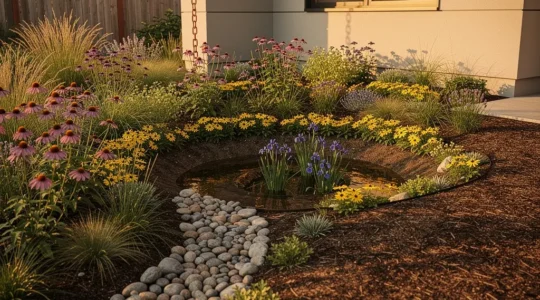
How to Design a Landscape That Solves Backyard Flooding Issues?
Backyard flooding is not solved by adding a drain, but by calculating water volume and engineering your landscape to absorb or divert it as a system. Diagnose the source—high water tables require elevation, while surface runoff requires absorption capacity calculated…
Read more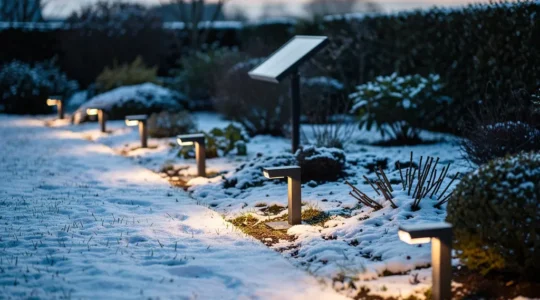
How to Choose Solar Garden Lights That Actually Work in Winter?
In Summary: Winter performance depends on electrochemical resilience and thermal management, not just panel wattage. NiMH batteries tolerate cold discharge better, but LiFePO4 lasts longer if protected from sub-zero charging. IP67-rated seals and breathable vents prevent moisture ingress and pressure…
Read more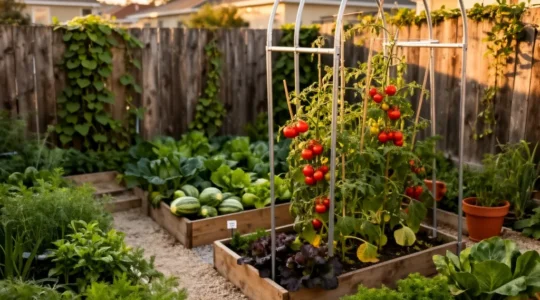
How to Grow a Year’s Worth of Vegetables in a Small Urban Backyard: The Complete High-Yield Blueprint
In Summary: The primary constraint in urban food production is not square footage but dimensional thinking—exploiting vertical space and temporal succession simultaneously. Biointensive methods yield 2–4 times more calories per square meter than conventional spacing by utilizing deep soil preparation…
Read more
How to Design a Native Plant Garden That Supports Local Bees and Butterflies?
Most pollinator gardens fail because they focus on adult nectar while ignoring larval food, soil biology, and winter shelter. Native plants support up to 15 times more caterpillars than exotics, providing essential larval food rather than just sugary nectar. Continuous…
Read more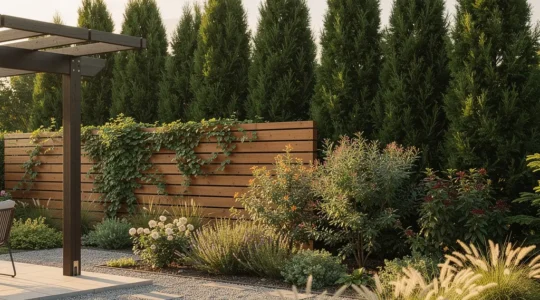
How to Create Privacy From Neighbors Using Plants and Structures?
True backyard privacy requires spatial strategy beyond simple fencing, integrating zoning law navigation, resilient multi-layered planting, and dual-purpose drainage solutions. Monoculture hedges like Leyland Cypress fail within 15 years, while mixed-species screens and bamboo offer century-long resilience Legal height restrictions…
Read more
How to Restore Life to Dead Soil Using Permaculture Principles?
Restoring dead soil is not about adding fertilizers, but about rebooting a living, self-sustaining ecosystem beneath your feet. Soil health is determined by its biological structure (the “fungal scaffolding”), not just its chemical composition. Synthetic inputs act like “fast food”…
Read more