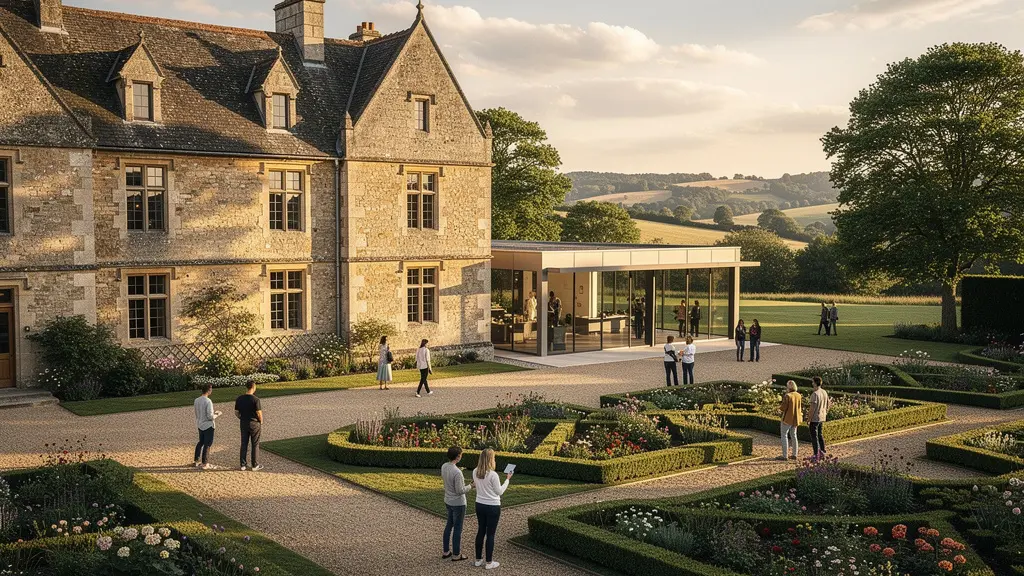
The key to financial survival for small heritage sites is to stop thinking like a caretaker and start acting like a heritage entrepreneur.
- Traditional funding like grants is unstable; a diversified model blending digital products, sponsorships, and community investment is essential.
- Monetizing your site’s unique story through scalable offerings like paid virtual tours creates revenue streams independent of foot traffic.
Recommendation: Immediately shift focus from solely chasing grants to developing one scalable digital product that captures your site’s unique narrative.
For the manager of a small heritage site, the financial reality can be daunting. The constant struggle to balance preservation costs with limited public funds often feels like an uphill battle. The conventional advice revolves around a familiar cycle: apply for more government grants, launch another donation drive, and hope for a modest increase in visitor numbers. While well-intentioned, this approach keeps sites in a perpetual state of financial precarity, dependent on external decisions and fluctuating public interest. The challenge is particularly acute for sites with fewer than 10,000 annual visitors, where economies of scale simply don’t apply.
But what if the solution wasn’t about finding more money from the same old sources? What if it was about fundamentally changing the business model? This is the core of heritage entrepreneurship: a strategic shift from being a passive custodian to an active creator of value. It involves looking at your site not just as a collection of artifacts or a historic building, but as a brand with unique intellectual property. This property—the stories, the knowledge, the very atmosphere of the place—can be packaged and monetized in ways that transcend physical location and limited capacity. It’s about creating new, scalable revenue streams that complement, rather than just depend on, traditional funding.
This guide moves beyond the platitudes of fundraising to offer a realistic, financially savvy framework for long-term sustainability. We will explore how to quantify the true economic cost of neglect, launch profitable digital products, build a resilient hybrid funding model, and leverage your community and volunteers as strategic partners. The goal is to empower you with the strategies to not just survive, but thrive.
This article provides a comprehensive roadmap, breaking down the essential strategies into actionable steps. Explore the sections below to build a robust and sustainable future for your heritage site.
Summary: A Strategic Guide to Heritage Site Sustainability
- Why neglecting local heritage sites costs small towns $500,000 annually in lost revenue?
- How to launch a paid virtual tour for a historical site in less than 3 weeks?
- Corporate sponsorship or government grants: Which funding model offers more stability for 5-year projects?
- The structural maintenance mistake that ruins stone facades within 10 years
- When to engage volunteers for restoration: The 4 distinct phases of a project
- City Council or National Arts Council: Which funding body is easier for a first-time applicant?
- Government grants or Crowdfunding: Which model sustains a 2-year training period best?
- How to Handle Repatriation Requests for Contested Artifacts Transparently?
Why neglecting local heritage sites costs small towns $500,000 annually in lost revenue?
The slow decay of a local heritage site is more than a cultural loss; it’s a significant economic drain that is often invisible until it’s too late. The cost of inaction extends far beyond the crumbling walls of a single property. It creates a negative ripple effect, depressing local property values, discouraging tourism, and erasing specialized jobs. The global heritage tourism market is a colossal industry, with a market size projected to be over $604.38 billion in 2024. Small towns that let their unique historical assets deteriorate are actively opting out of this economy, leaving hundreds of thousands of dollars on the table each year.
Quantifying this loss is the first step toward making a compelling case for investment. The “lost revenue” isn’t just about non-existent ticket sales. It encompasses a broader economic ecosystem. A well-maintained heritage site acts as an anchor, boosting the value of surrounding real estate and driving traffic to local businesses like cafes, shops, and hotels. When a site becomes an eyesore, it does the opposite, signaling disinvestment and decline. The loss also includes the disappearance of knowledge-economy jobs—curators, conservators, historians, and educators—that are difficult to replace once gone. A five-year projection of this cumulative decline often reveals a staggering figure, frequently exceeding half a million dollars for even a small town.
To reverse this trend, managers must learn to speak the language of economic impact. Instead of framing funding requests around “saving history,” they must present them as strategic investments with a clear return. This means calculating the direct revenue from potential tourism, the indirect benefit to adjacent businesses, and the long-term premium on property values. Proving the tangible financial cost of neglect transforms the conversation from a plea for charity into a sound business proposition that town councils and investors can understand and support.
How to launch a paid virtual tour for a historical site in less than 3 weeks?
For a small heritage site, physical visitor numbers will always have a ceiling. A paid virtual tour shatters that ceiling, creating a scalable revenue stream that can reach a global audience. Far from being a complex, multi-year project, launching a professional-quality virtual tour is now faster and more accessible than ever. The key is choosing the right platform and focusing on a minimum viable product. Rather than trying to digitize the entire site at once, start with your most compelling room or story. This focused approach allows for a rapid launch, generating revenue and feedback that can fund future expansion.

The impact of this digital asset goes beyond direct sales. High-quality virtual tours significantly boost engagement for physical visits. For instance, some hospitality brands have seen a 67% increase in online booking engagement after implementing 360-degree tours. For a heritage site, this means a virtual tour can act as a powerful marketing tool, converting online viewers into future on-site visitors. The tour itself can be enriched with interactive hotspots, linking to archival photos, audio narration from a curator, or even short video clips, creating a premium experience that justifies a price point.
To get started in under three weeks, a basic-tier platform is often sufficient. These platforms handle the technical backend, allowing you to focus on content. The process typically involves capturing 360-degree photos (many modern smartphones or affordable dedicated cameras can do this), uploading them to the platform, and adding your interactive content. Setting a price, connecting a payment gateway, and embedding the tour on your website can be done in days, not months. The following table gives an overview of what to expect from different platform tiers.
| Platform Feature | Basic Tier | Professional Tier | Enterprise Tier |
|---|---|---|---|
| Setup Time | 3-5 days | 7-10 days | 14-21 days |
| 360° Coverage | 10 viewpoints | 50 viewpoints | Unlimited |
| Interactive Hotspots | 5 per tour | 25 per tour | Unlimited |
| Live Guide Option | Not available | Up to 20 participants | Up to 100 participants |
| Monthly Cost | $99-199 | $299-599 | $999+ |
| Revenue Share | 30% | 20% | 10% |
Corporate sponsorship or government grants: Which funding model offers more stability for 5-year projects?
When planning a multi-year project, the question of funding stability is paramount. The traditional path often leads to government grants, which offer the allure of large sums and official validation. However, they come with significant drawbacks: long application cycles, fierce competition, rigid reporting requirements, and no guarantee of renewal. A grant that funds years one and two can easily disappear in year three, leaving a project in limbo. Corporate sponsorships, while often smaller in scale, can offer a different kind of value. They are typically more flexible, relationship-driven, and can be renewed more easily if the partnership provides clear value to the sponsor.
For a five-year project, neither model alone offers true stability. Relying solely on government grants is a high-risk gamble on political and budgetary cycles. Relying only on corporate sponsorship makes a site vulnerable to a sponsor’s changing marketing priorities or financial health. The most resilient approach is a hybrid funding model that strategically diversifies revenue sources. As cultural heritage expert Mark Robinson advises in his work *Making Adaptive Resilience Real*, the goal is to create a balanced portfolio.
Don’t put all your eggs in one basket.
– Mark Robinson, Making Adaptive Resilience Real
This “portfolio” approach is the essence of heritage entrepreneurship. It means securing a foundational government grant for a core component of the project (e.g., structural work), while simultaneously cultivating corporate sponsors for specific, visible elements (e.g., a new exhibition or a digital program). This is then supplemented with self-generated revenue from sources like virtual tours, memberships, and events. This diversification means that the loss of any single funding stream does not jeopardize the entire project. It builds a financial structure that is adaptable and far more stable over the long term, protecting the project from the volatility inherent in any single source.
The structural maintenance mistake that ruins stone facades within 10 years
In the rush to patch up a deteriorating stone facade, one of the most common and catastrophic mistakes is using the wrong mortar. Well-meaning but uninformed contractors often turn to modern Portland cement for repairs because it’s strong, readily available, and cures quickly. However, for historic stonework, this is a ticking time bomb. Historic structures were built with soft, breathable lime mortar. Applying a hard, impermeable cement mortar over or next to it traps moisture inside the stone. In climates with freeze-thaw cycles, this trapped water freezes, expands, and literally blows the face off the stone, a process known as spalling. What began as a simple mortar repair can lead to irreversible damage to the original fabric of the building within a single decade.
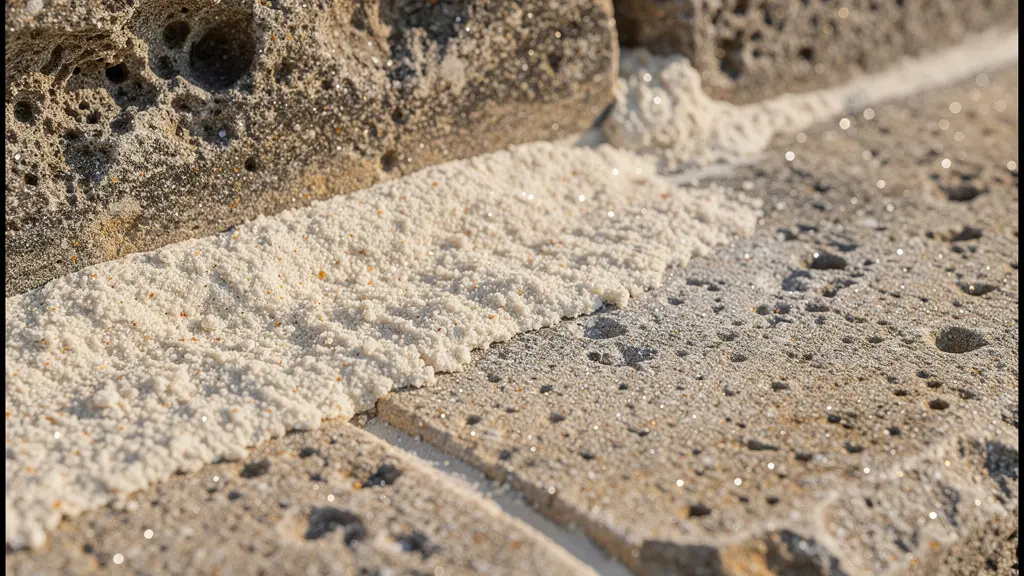
The core principle of historic masonry is that the mortar should always be softer and more porous than the stone itself. It is designed to be a sacrificial element, absorbing moisture and weathering away over decades, thus protecting the much more valuable stone. Cement mortar inverts this relationship. It is harder and less permeable than most historic stone, forcing the stone to become the sacrificial element. Identifying and correcting this mistake is a critical priority for any heritage site manager. The tell-tale signs are often hairline cracks forming around the cement patch, followed by white salt deposits (efflorescence) and eventually the flaking or crumbling of the stone surface.
Correcting this involves the careful, manual removal of the damaging cement mortar and repointing with a historically appropriate lime mortar. This is not a standard construction job; it requires specialist knowledge of historic materials. A proper repair will not only halt the damage but will restore the building’s ability to breathe, ensuring the long-term preservation of its facade. Before undertaking any masonry work, a thorough audit is essential to prevent costly and destructive errors.
Action Plan: Auditing Your Stone Facade for Mortar Issues
- Identify Mortar Type: Perform a simple acid test (with proper safety precautions) on a small, inconspicuous sample of mortar. Lime-based mortars will fizz, while cement mortars will not. Document the locations of different mortar types.
- Check for Trapped Moisture: After a rain, observe which areas of the wall dry the slowest. Areas with cement patches often stay dark longer, indicating trapped moisture behind them. Use a moisture meter for a more precise reading.
- Document Damage Patterns: Photograph and map all areas showing signs of spalling (flaking stone), efflorescence (white powdery deposits), or cracking, noting their proximity to cement repairs.
- Assess Previous Repairs: Review maintenance logs to identify when and where cement-based products were used. Correlate this information with the damage map to establish a clear cause-and-effect relationship.
- Create a Prioritized Action Plan: Based on the audit, create a plan to systematically remove the most damaging cement patches first, starting with areas showing the most severe stone decay, and budget for replacement with appropriate lime mortar.
When to engage volunteers for restoration: The 4 distinct phases of a project
Volunteers are an invaluable asset for any heritage site, but engaging them effectively requires a strategic, phased approach. Throwing untrained volunteers at a complex restoration task is not only dangerous but can cause irreparable damage. A successful volunteer program matches tasks to skill levels and project phases, maximizing their contribution while mitigating risk. A project can be broken down into four distinct phases, each offering unique opportunities for volunteer involvement.
The initial phases are focused on low-risk, high-value tasks. In Phase 1 (Documentation), volunteers can be instrumental in digital archiving, photographing the site before work begins, and conducting oral history interviews with community members. These tasks require minimal training and create a vital record of the site’s condition. In Phase 2 (Stabilization), skilled volunteers can participate in supervised activities like gentle cleaning of surfaces, clearing vegetation, or performing basic repairs under the direct mentorship of a professional. Here, the focus is on non-invasive work that prepares the site for more specialized intervention.
The most critical distinction comes in Phase 3 (Specialist Restoration). This phase, involving tasks like structural repairs, chemical consolidation, or intricate conservation work, should be reserved exclusively for professional conservators. The risk of permanent damage from inexpert hands is simply too high. Volunteers can play crucial support roles, such as material prep or site logistics, but should not be performing the core restoration tasks. Finally, in Phase 4 (Interpretation), volunteers truly shine. Trained as tour guides, living history interpreters, or maintenance monitors, they become the public face of the site, bringing its story to life and ensuring its continued care.
Case Study: English Heritage’s “The Victorian Way”
English Heritage’s project at Audley End House is a masterclass in Phase 4 volunteer engagement. Starting in 2008, they engaged volunteers and historical interpreters to portray 1881 census servants, performing live cookery demonstrations. This initiative not only provided an authentic visitor experience but evolved into the hugely popular YouTube channel, ‘The Victorian Way.’ As detailed in reports on their digital strategy and confirmed by their magazine, this volunteer-supported program generated over 200 million views, creating an entirely new, scalable revenue stream while preserving historical authenticity through careful volunteer training and supervision. It demonstrates how investing in volunteer interpretation can yield massive financial and engagement returns, transforming a cost center into a profit center.
The table below outlines a clear timeline for engaging volunteers, ensuring their safety and the project’s integrity.
| Phase | Duration | Volunteer Tasks | Required Expertise | Risk Level |
|---|---|---|---|---|
| Phase 1: Documentation | Months 1-3 | Digital archiving, photography, oral histories | Basic training only | Low |
| Phase 2: Stabilization | Months 4-9 | Cleaning, basic repairs under supervision | Skilled volunteers with mentoring | Medium |
| Phase 3: Specialist Restoration | Months 10-18 | Support roles only | Professional conservators | High |
| Phase 4: Interpretation | Months 19-24+ | Tour guides, maintenance monitoring | Training in heritage interpretation | Low |
City Council or National Arts Council: Which funding body is easier for a first-time applicant?
For a first-time grant applicant, the funding landscape can be intimidating. The choice between applying to a local City Council versus a prestigious National Arts Council is a strategic one that can significantly impact the likelihood of success. While the larger sums offered by national bodies are tempting, for a newcomer, the City Council is almost always the easier and more strategic starting point. Local councils prioritize projects that demonstrate clear community impact, social cohesion, and direct benefits to local residents and businesses—metrics that a local heritage site is perfectly positioned to deliver.
The application process for municipal grants is generally less complex, the competition is geographically limited, and grant officers are often more accessible for informal conversations. Building a relationship with the local grants officer six months before a submission deadline can provide invaluable insights into their priorities. Framing your narrative is key: for a City Council, emphasize metrics like “local job creation,” “increased foot traffic for downtown businesses,” and “providing educational programs for local schools.” This positions your project not as an isolated historical endeavor, but as an engine for community development.
Conversely, National Arts Councils operate on a different scale. They seek projects of “national cultural significance” and “artistic excellence.” The competition is nationwide, and review panels are composed of leading experts who expect a high level of academic and professional rigor. A first-time applicant with no prior grant history is at a significant disadvantage. The most effective strategy is to use local grants as a stepping stone. Securing a smaller grant from the City Council and meticulously documenting its successful outcomes—number of visitors, positive press, testimonials from local business owners—builds a crucial track record. This proof of concept and demonstrated ability to manage public funds makes a subsequent application to a national council exponentially stronger.
- Match Project Scope to Funder: Aim for City Council grants for community-focused projects, typically under $50,000. Reserve National Council applications for larger, landmark projects with a proven track record.
- Build Relationships Proactively: Schedule informal meetings with grant officers well in advance. For local councils, this is often a simple phone call; for national bodies, it may involve attending their informational webinars.
- Frame Your Narrative Appropriately: Tailor your proposal’s language. Use “community benefit” and “social cohesion” for local applications, and “cultural significance” and “national heritage” for national ones.
- Start Small to Build Credibility: A successful $10,000 grant from the City Council is a more valuable asset for a first-timer than a rejected $100,000 application to the National Arts Council.
Government grants or Crowdfunding: Which model sustains a 2-year training period best?
Funding a two-year training program for heritage skills presents a unique sustainability challenge. Government grants can provide a large, upfront sum, but their rigid structure often clashes with the adaptive nature of training. If program needs change, reallocating grant funds is difficult, and renewal after two years is never certain. Crowdfunding, on the other hand, offers incredible flexibility and builds a powerful community of supporters. However, it typically raises smaller amounts and is better suited for short, high-impact campaigns rather than sustained operational funding.
For a multi-year training program, the most sustainable approach is a hybrid model that leverages the strengths of both. The key is sequencing. A crowdfunding campaign should come first. Its purpose is not to fund the entire two-year program, but to achieve two critical objectives: secure initial seed money and, more importantly, provide irrefutable proof of community demand. A successful campaign that raises $20,000 from 300 local backers sends a powerful message to a government funding body: this program is wanted, needed, and supported by the community it serves.
Case Study: The Match-Funding Multiplier
The global virtual tour platform market is rapidly growing, and European heritage sites have pioneered a powerful funding model. They launch initial crowdfunding campaigns to develop a small-scale virtual tour or digital archive project. This initial success, demonstrating public interest and digital savvy, is then used as leverage in applications for much larger, multi-year government grants focused on digital heritage skills training. The crowdfunded project becomes the pilot program that de-risks the investment for the government agency, often unlocking grants that are 5x to 10x the amount originally raised from the community.
This “crowd-to-grant” pipeline transforms the dynamic. The application is no longer just a proposal; it’s a proven concept with a built-in audience. This model creates a virtuous cycle: the initial community funds get the project started, the grant provides the long-term stability for the full training period, and the engaged community from the crowdfunding campaign becomes the program’s biggest advocates and a source of future support. The table below compares the characteristics of each model, highlighting the superiority of a blended approach.
| Aspect | Government Grants | Crowdfunding | Hybrid Model |
|---|---|---|---|
| Initial Funding Speed | 6-12 months | 1-3 months | 3-6 months |
| Community Engagement | Low | Very High | High |
| Reporting Requirements | Rigid quarterly reports | Flexible updates | Moderate |
| Program Adaptability | Low | High | Medium |
| Long-term Sustainability | Dependent on renewal | Community-driven | Diversified |
| Typical Amount Raised | $100K-500K | $10K-50K | $50K-200K |
Key Takeaways
- Financial sustainability requires a mindset shift from passive caretaker to active “heritage entrepreneur.”
- Diversify income through a hybrid model: blend grants, sponsorships, and self-generated revenue from digital products.
- Use community-driven methods like crowdfunding as proof of demand to unlock larger, long-term government grants.
How to Handle Repatriation Requests for Contested Artifacts Transparently?
Requests for the repatriation of contested artifacts present one of the most complex and sensitive challenges a heritage institution can face. For small sites, which often lack dedicated legal teams, these requests can be overwhelming. The key to navigating this process is radical transparency and a commitment to open dialogue. Ignoring or stonewalling a request is the worst possible approach; it breeds mistrust and escalates conflict. The first step is to establish a clear, publicly accessible policy that outlines the process for how your institution handles such claims. This policy should be based on established international museum ethics and national laws.
The process must be centered on collaborative research and mutual respect. This means acknowledging the legitimacy of the claimant community’s perspective and inviting them to be partners in investigating the artifact’s provenance (its history of ownership). This can involve sharing all available documentation, facilitating access to the object for non-invasive study, and co-organizing workshops or meetings to discuss historical evidence. The goal is to move from an adversarial “us vs. them” dynamic to a collaborative search for a just and historically sound resolution. This transparent process, even if it does not immediately result in physical repatriation, builds trust and respects the cultural significance of the artifact to all parties.
In this dialogue, digital tools offer a powerful bridge. While discussions about physical return are ongoing, offering to create a high-fidelity 3D model or a comprehensive virtual exhibit of the artifact can be a significant gesture of goodwill. This “digital repatriation” provides immediate access to the claimant community and a global audience. As research in *Tourism Management Perspectives* highlights, digital access can fulfill crucial learning and cultural needs. This approach is not a substitute for physical repatriation, but it is a powerful interim step that demonstrates respect, facilitates scholarship, and aligns with the entrepreneurial spirit of creating new value from heritage assets.
Virtual tourism attributes can satisfy users’ learning experience, which is a very important personal value of cultural heritage tourism destinations.
– Tourism Management Perspectives, Virtual tourism attributes in cultural heritage: Benefits and values
By embracing the mindset of a heritage entrepreneur, you can move your organization from a position of financial vulnerability to one of strength and resilience. The strategies outlined here—quantifying economic impact, developing scalable digital products, building a hybrid funding portfolio, and engaging stakeholders strategically—provide a clear path toward a sustainable future. Start today by identifying one new revenue-generating action you can implement in the next 90 days.