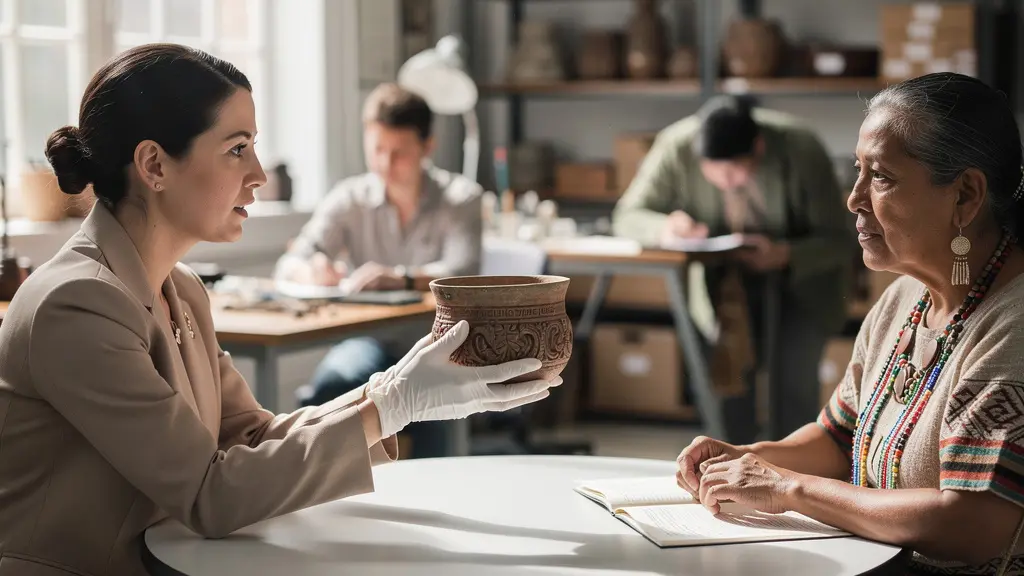
The true challenge of repatriation is not legal defense but a deficit in moral authority; the solution lies in building a proactive diplomatic framework based on radical transparency.
- Legal ownership is no longer a sufficient defense against public campaigns demanding the return of artifacts with controversial histories.
- Institutions that shift from a silent, defensive posture to one of proactive investigation and open communication can transform a crisis into an act of leadership.
Recommendation: Instead of waiting for a demand, begin by building an internal “transparency infrastructure” to research your collection and open collaborative dialogues with source nations.
For museum directors and curators, the growing frequency and volume of repatriation demands can feel like a siege. An artifact acquired a century ago under a different legal and ethical standard suddenly becomes a viral hashtag, placing your institution at the center of a storm. The traditional response, often guided by legal counsel, has been to retreat behind the shield of legal ownership, maintain a defensive silence, and hope the storm passes. This strategy is no longer viable. The public conversation has shifted from a legal question of “Who owns this?” to a moral one: “Who *should* be the steward of this heritage?”
While some institutions focus on the potential for “opening the floodgates,” they miss the fundamental point. This is not merely a legal or public relations problem to be managed; it is a profound challenge to an institution’s ethical foundation and its very right to hold its collection. The pressure you feel is a symptom of a growing “custodial deficit”—a gap between your legal title and your perceived moral legitimacy. But what if the key to navigating this new reality wasn’t about strengthening your legal defenses, but about fundamentally rethinking your role from owner to steward?
This article moves beyond the defensive posture. It provides a strategic framework for museum leadership to handle repatriation requests not as threats, but as opportunities for diplomatic leadership. We will explore why the concept of moral ownership now outweighs legal title in the public square and provide concrete protocols for investigating an object’s past. We will then delve into the communication and diplomatic strategies that allow an institution to get ahead of the narrative, transforming a potentially damaging conflict into a collaborative process that rebuilds trust and re-establishes your institution’s authority on a new, more stable ethical footing.
This guide will walk you through the essential strategic shifts required to lead in this new era of cultural stewardship. The following sections provide a detailed roadmap for moving from a reactive, defensive position to a proactive, diplomatic one.
Summary: How to Handle Repatriation Requests for Contested Artifacts Transparently?
- Why legal ownership is not the same as moral ownership in the eyes of the public?
- How to investigate the “blank years” in an object’s history to determine if it was looted?
- Permanent return or Long-term loan: Which legal framework satisfies both parties?
- The communication mistake of staying silent when a restitution demand goes viral
- How to start the conversation with source nations before they make a public demand?
- Colonial maps or ethnic divisions: Which factor explains current regional instability better?
- Why your direct emails are considered rude by your Asian colleagues?
- How to Use Historical Context to Interpret Modern Geopolitical Conflicts Correctly?
Why legal ownership is not the same as moral ownership in the eyes of the public?
For generations, a valid acquisition record was the ultimate defense for a museum’s collection. Today, it is merely the starting point of a much more complex public conversation. The core of the issue lies in the widening chasm between what is legally owned and what is morally legitimate. An institution may hold an impeccable legal title to an artifact, but if the public perceives the original acquisition as unjust—often linked to colonial power imbalances—that legal document offers little protection from reputational damage. This is the new reality of custodial integrity, where a museum’s right to hold an object is judged not by century-old laws, but by contemporary ethical standards amplified on a global scale.
The case of the Benin Bronzes is the quintessential example. These masterworks, looted by British troops in 1897, were legally acquired and held by Western museums for over a century. Yet, sustained public campaigns and viral social media movements framed them as potent symbols of colonial theft. This immense public pressure effectively nullified the legal argument, leading institutions like Cambridge University’s Jesus College to return a bronze in 2021, setting off a chain reaction across the globe. The lesson is clear: in the court of public opinion, moral ownership, rooted in cultural origin and historical justice, is now the dominant currency. This trend is accelerating, with recent actions like the 1,300 pre-Columbian artifacts returned to Mexico by a California museum in 2023 demonstrating a significant shift in institutional practice.
For a museum director, this means the primary risk is no longer legal challenge, but the erosion of public trust, what can be termed a “custodial deficit.” Managing this deficit requires a new set of tools focused on transparency and public sentiment, rather than legal defense alone.
Your action plan: Measure and Manage Your ‘Custodial Deficit’
- Establish a monitoring protocol: Actively track social media sentiment and engagement metrics related to contested objects in your collection on a weekly basis.
- Quantify public perception: Conduct quarterly surveys with visitors to create a tangible index of their views on the institution’s moral right to hold specific items.
- Build a transparency baseline: Publish all available provenance information online for key objects and track how this disclosure impacts public trust scores over time.
- Develop rapid response protocols: Create holding statements that acknowledge moral concerns and can be deployed within 48 hours of a viral event, emphasizing “stewardship” over “ownership.”
- Form a community advisory panel: Include representatives from source communities to provide continuous, direct input on questions of custodial legitimacy and interpretation.
How to investigate the “blank years” in an object’s history to determine if it was looted?
Determining whether an artifact was looted requires a forensic approach that goes far beyond a simple review of acquisition papers. The most critical clues often lie in the “blank years”—the gaps in an object’s provenance, or history of ownership. For a curator, investigating these gaps is an ethical imperative. The key is to treat the absence of information as data in itself. If an object disappears from the record during a known period of conflict or colonial exploitation in its region of origin, that silence is a significant red flag. This method, a “negative space” investigation, shifts the burden of proof, demanding that gaps be explained rather than accepted.
A proactive investigation involves a multi-disciplinary effort. As demonstrated by the Virginia Museum of Fine Arts in their 2023 repatriations, success comes from deep collaboration. By working with law enforcement, international databases, and source nation experts, they were able to trace an ancient artwork stolen in 1963 by cross-referencing dealer records and shipping manifests, effectively filling a 60-year provenance gap. This type of work requires building a transparency infrastructure within the museum, dedicating resources to digital archives, and fostering international partnerships.
The investigative process combines archival research with scientific analysis. It begins by mapping an object’s timeline against historical conflicts and colonial expeditions. Researchers then consult resources like the UNESCO Database of National Cultural Heritage Laws to understand what export permits were required at the time. Finally, forensic techniques can connect an object to a specific place, making the intangible history tangible.

This level of detail, as seen in the scientific analysis of an artifact’s surface, is where the story is often found. Forensic techniques like X-Ray Fluorescence (XRF) spectroscopy to determine metal composition, thermoluminescence for dating ceramics, and isotope analysis can link an object’s material to a specific quarry or geographic region, providing physical evidence that can corroborate or challenge the documented provenance. This turns the curator into a detective, piecing together a history that was often intentionally obscured.
Permanent return or Long-term loan: Which legal framework satisfies both parties?
When provenance research confirms a problematic history, the conversation shifts to the solution. The debate is often framed as a binary choice: a permanent return of the object or a long-term loan agreement. While these appear to be simple legal options, they represent profoundly different philosophical outcomes. A permanent return involves the transfer of legal title, a complete relinquishment of ownership that acknowledges the source nation’s absolute right to the object. A long-term loan, conversely, allows the Western museum to retain legal title while the object is physically located in the source nation, often for extended and renewable periods. This option is frequently favored by institutions concerned about legal precedent or deaccessioning policies.
However, framing the discussion around these two options alone misses the core of the issue, which is a question of restoring more than just physical possession. As Yale professor Cécile Fromont has argued, the goal is not just about returning objects but about the restitution of ownership itself, which opens up new possibilities. This insight reframes the entire debate.
Repatriation is not just about returning objects, but about restitution of ownership, which allows for different ways of thinking about questions of cultural patrimony including who owns a work versus where it is kept.
– Cécile Fromont, ARTnews Interview
This perspective suggests a more creative, diplomatic approach. For example, a museum could formally transfer legal title but simultaneously negotiate a collaborative agreement for the object to be loaned *back* to the Western institution for specific exhibitions. This model acknowledges the source nation’s sovereign ownership while creating a new, more equitable partnership based on mutual respect and shared curatorial goals. This builds “relationship equity” for the future. The most successful framework is therefore not a one-size-fits-all legal template, but a bespoke agreement that prioritizes the restoration of ownership first, and then collaboratively addresses the physical location and stewardship of the object.
The communication mistake of staying silent when a restitution demand goes viral
When a repatriation demand explodes online, an institution’s first instinct is often to go silent, issue a “no comment,” and let the legal and PR teams draft a formal response. This is the single biggest communication mistake a museum can make. In the digital age, silence is not neutral; it is interpreted as guilt, arrogance, or dismissal. The first 48 hours of a viral controversy are critical, and the absence of a swift, transparent, and empathetic response creates a vacuum that will be filled by critics, activists, and speculation. This inaction surrenders control of the narrative at the most crucial moment, making any subsequent response appear defensive and reactive.
The solution is to have a pre-prepared crisis response protocol that prioritizes immediate transparency over delayed perfection. This doesn’t mean conceding to the demand within hours. It means immediately acknowledging the request with respect, expressing a commitment to a transparent process, and outlining the next steps. The goal is to manage the conversation, not win the argument. The Metropolitan Museum of Art learned this lesson after the 2019 scandal involving the looted Gilded Coffin of Nedjemankh. Following the forced return, Director Max Hollein pivoted the museum’s strategy from defensiveness to proactive transparency, publicly leading reforms and establishing new communication protocols. This shift rebuilt credibility by demonstrating institutional accountability.

A proactive communication strategy requires a dedicated infrastructure. Within the first day, the museum should deploy a holding statement on all social channels. By the 48-hour mark, it should publish an initial transparency package, including all known provenance records and a clear timeline for a full review. This can be housed on a dedicated microsite that becomes the central, authoritative source of information, countering misinformation with facts. This approach demonstrates respect for the claimants and the public, showing that the institution takes its ethical obligations as seriously as its legal ones. It changes the museum’s role from a fortress under siege to an open forum for dialogue.
How to start the conversation with source nations before they make a public demand?
The most effective strategy for managing repatriation is to ensure you are never caught by surprise. This requires a fundamental shift from a reactive posture—waiting for a demand to arrive—to one of proactive diplomacy. The goal is to build relationships and open channels of communication with source nations and communities long before a specific claim is made. This approach not only minimizes the risk of a public, confrontational demand but also reframes the museum as a collaborative partner rather than an adversarial holder of cultural property. It is about building “relationship equity” that can be drawn upon when sensitive issues arise.
The Fowler Museum at UCLA provides a powerful model. In early 2024, the museum voluntarily initiated the return of several objects after its own internal provenance research revealed problematic histories. By announcing the returns as “voluntary and initiated by the museum,” they fundamentally shifted the power dynamic. They were not responding to pressure; they were leading with their ethics. This act of proactive stewardship positions the museum as a trusted partner committed to rectifying historical injustices, earning a level of goodwill that a reactive repatriation can never achieve.
Building this kind of relationship requires a dedicated infrastructure for “soft diplomacy.” This is not about one-off meetings but about creating permanent, structural links. Museums can establish funded joint curatorial positions with institutions in source nations, creating a permanent liaison. They can launch grant programs that empower source communities to research their own heritage within the museum’s collection. A particularly powerful strategy is to bypass capital city institutions and engage directly with regional museums and cultural centers closest to an object’s origin. These actions transform the relationship from one of gatekeeper and petitioner to one of genuine partnership, based on shared respect for the cultural heritage in question.
Colonial maps or ethnic divisions: Which factor explains current regional instability better?
To understand the complexities of modern repatriation claims, a curator must also be a student of history and geopolitics. Many of today’s most intractable repatriation disputes are rooted in the arbitrary lines drawn on maps by colonial powers in the 19th and 20th centuries. These borders, which often ignored ethnic, linguistic, and cultural realities, are a primary source of ongoing regional instability. When a repatriation claim arises, it is often about more than just a single object; it can be an attempt to assert a national or cultural identity that was suppressed or fractured by colonial map-making.
As artist and activist Jim Chuchu states, every repatriation request can be seen as an attempt to redraw these historical lines, not with armies, but with cultural diplomacy. This insight is critical for museum directors. The process of transparently handling a request becomes, in essence, an act of geopolitical re-negotiation. It requires an understanding that the “country of origin” may itself be a contested concept.
Each repatriation request is an attempt to ‘correct’ this map, making the process of transparently handling requests an act of geopolitical re-negotiation.
– Jim Chuchu, TED Talk
The 2021 Dutch court ruling on the “Crimean Artifacts” provides a stark illustration of this challenge. The artifacts were on loan from museums in Crimea when Russia annexed the peninsula in 2014. This created competing claims from Ukraine (which asserts sovereignty over Crimea) and the Russia-backed Crimean museums. The court ultimately ruled in favor of Ukraine, but the case highlights the ultimate difficulty: what happens when an artifact’s origin lies in a region now split by a disputed border, which is itself a legacy of older imperial borders? It proves that provenance research is not just art history; it is an engagement with the ongoing, unresolved consequences of colonialism.
Why your direct emails are considered rude by your Asian colleagues?
While the title seems specific, its underlying lesson is universal for repatriation negotiations: direct, low-context communication, common in Western institutional settings, can be disastrously counterproductive in the delicate diplomacy of cultural restitution. Negotiations with representatives from many cultures, including those in Asia, Africa, and Indigenous communities, often operate on a high-context basis. In this framework, relationship-building, respect for ceremony, and the ability to read indirect signals are more important than the bullet points in a legal document. To insist on a purely transactional, “just the facts” approach is to signal disrespect and undermine the potential for a collaborative outcome.
The goal is to build trust before tackling the problem. Successful negotiations often begin with meetings that don’t even mention repatriation directly, focusing instead on shared cultural appreciation and mutual respect. Ceremonial elements, like the exchange of gifts or sharing of meals, are not peripheral activities; they are central to the process of establishing a relationship of equals. Learning to interpret a “soft no”—such as a period of silence or a phrase like “it is very difficult”—is a crucial skill. It allows for a face-saving way to express disagreement without direct confrontation, preserving the relationship for future dialogue. As Maasai representative Samwel Nangiria expressed when working with the Pitt Rivers Museum, the ultimate aim is a shared understanding of an object’s significance.
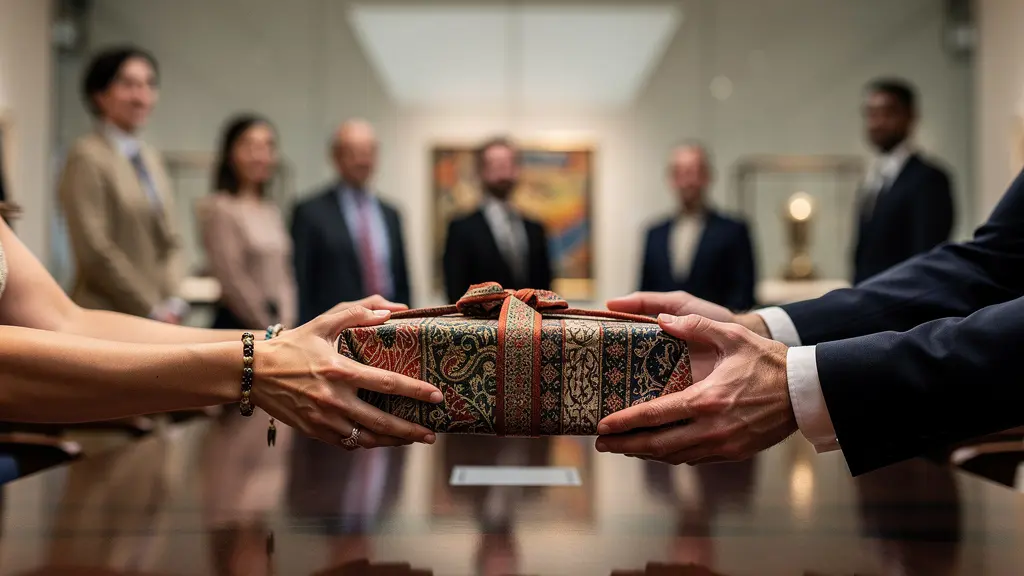
This approach requires patience and cultural fluency. Engaging neutral third-party cultural advisors who can bridge communication styles is a wise investment. The ultimate agreement should be structured to allow both parties to “save face” and present the outcome as a victory to their respective constituents. In high-context diplomacy, there should be no losers, only partners in a newly formed relationship. This is the essence of shifting from a legal battle to a diplomatic engagement.
We want them to attach the same significance to these objects that indigenous communities do… There are no restrictions on the access that communities have to the collections, the time they spend on the process or the eventual fate of the objects.
– Samwel Nangiria, Maasai representative working with Pitt Rivers Museum
Key takeaways
- The debate on repatriation has decisively shifted from legal ownership to moral stewardship; public perception is now the primary driver of institutional risk.
- A silent, defensive posture during a repatriation claim is no longer viable; proactive transparency and rapid, respectful communication are essential to managing the narrative.
- The most effective strategy is proactive diplomacy: building long-term relationships and collaborative partnerships with source communities before a formal demand is ever made.
How to Use Historical Context to Interpret Modern Geopolitical Conflicts Correctly?
For museum leaders facing repatriation demands, one of the most pervasive fears is that of the “slippery slope”—the argument that returning a single object will “open the gateway to the question of the entire contents of our museums,” as one UK Culture Secretary warned. This fear, while understandable, often lacks historical perspective. Large-scale repatriation is not a new or unprecedented phenomenon. In fact, history provides a powerful precedent for how to manage it. Looking back, we can see that restitution has often been an integral part of resolving major international conflicts.
The aftermath of the Napoleonic Wars is a case in point. Napoleon was a systematic plunderer of European art. Yet, after his defeat, a massive and largely successful effort was undertaken to return looted treasures. Historical precedent shows that as much as 55% of Napoleon’s looted art was successfully repatriated after the Battle of Waterloo in 1815. This was a complex, politically charged process, yet it was managed. It demonstrates that the concept of returning culturally significant items is deeply embedded in Western legal and diplomatic tradition. It is not a radical new idea, but a principle that has been applied for over two centuries.
Using this historical context allows museum directors to reframe the current situation. The challenge is not an existential threat to the existence of museums, but the latest chapter in a long history of negotiating the rightful place of cultural property. It shifts the perspective from “Will we have to give everything back?” to “How do we, in our time, ethically and professionally manage the stewardship and, when necessary, the return of cultural heritage?” This approach counters the fear-based “slippery slope” argument with a fact-based, historically grounded model of manageable restitution. It provides the confidence to lead, rather than react in fear.
The challenge of repatriation is, at its heart, a call for a new kind of institutional leadership. It requires moving beyond the role of a guardian of objects to become a facilitator of relationships and a proactive agent of historical reconciliation. By embracing transparency, investing in provenance research, and building a diplomatic infrastructure, your institution can navigate this complex landscape not as a defendant, but as a respected global partner. Begin today by initiating the internal conversation about building the frameworks for this new, more ethical model of stewardship.