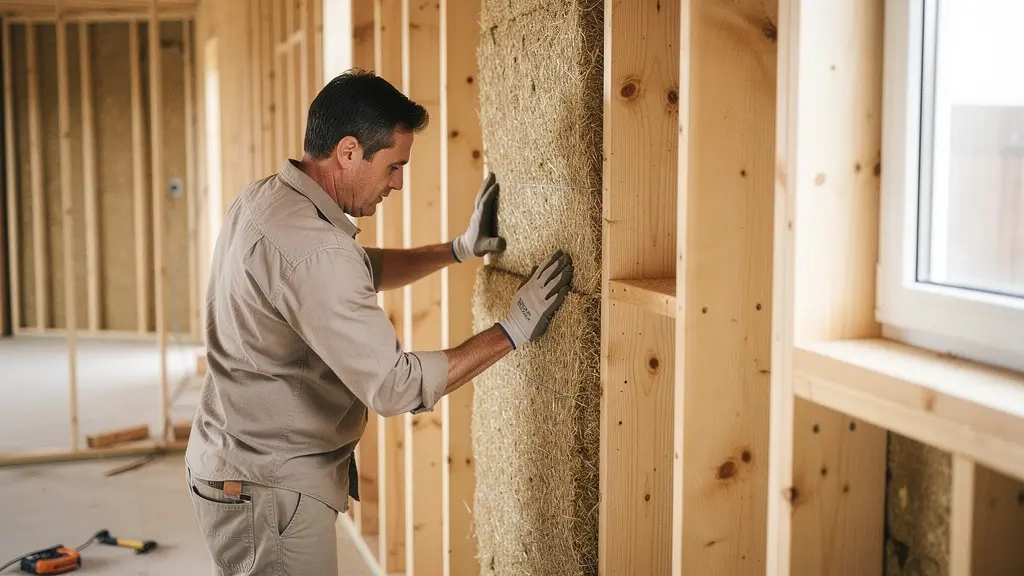
The real benefit of natural insulation isn’t just being “green”; it’s its ability to create a dynamic, breathable system that keeps older homes healthy and comfortable year-round.
- Natural fibers actively manage moisture, preventing the mold and rot common with synthetic foams in stone or brick walls.
- Their high density provides “thermal phase shift,” keeping homes cool in summer—a benefit standard R-value doesn’t measure.
Recommendation: Prioritize vapor-permeable materials like hemp and wool, especially in older constructions, to work with the building’s natural physics, not against it.
For homeowners renovating an older house, choosing the right insulation feels like a high-stakes decision. The common path leads to synthetic materials like fiberglass or polystyrene foam, praised for their high R-values and low cost. Yet, in a historic home with solid stone or brick walls, this modern solution can create a nightmare scenario. By wrapping the house in an impermeable plastic-like layer, these materials trap moisture that naturally moves through old walls, leading to condensation, hidden mold, and structural rot. It’s a fix that often causes a more insidious problem down the line.
This approach fundamentally misunderstands the physics of an older building. These structures were designed to breathe. But what if the goal wasn’t just to block airflow, but to work with it? What if insulation could act less like a plastic bag and more like a high-performance, breathable skin? This is the core principle behind using natural fibers like hemp and wool. Their value extends far beyond an “eco-friendly” label; it lies in their ability to function as a dynamic system that actively manages moisture, heat, and indoor air quality.
To showcase how this video works in a real-world scenario, the following guide gives you a more practical and immersive look into how to install hemp fiber insulation, a perfect complement to the technical details we explore in this article.
This article moves beyond simplistic comparisons of R-value and cost. We will explore the building science that makes natural fibers uniquely suited for older homes, from preventing mold to keeping your house cool in the summer. By understanding these mechanisms, you can make an informed choice that ensures the long-term health of both your home and your family.
Contents: A Deep Dive into Natural Insulation Systems
- Why Do Natural Fibers Prevent Mold Better than Synthetic Foam in Old Stone Walls?
- Hemp Blocks vs. Polystyrene: How Long Does It Take to Earn Back the Higher Upfront Cost?
- The Density Mistake That Causes Wool Insulation to Slump and Create Cold Spots
- How to Find a Local Farmer or Producer to Minimize the Carbon Footprint of Transport?
- How Wood Fiber Insulation Keeps Your House Cool in August (Phase Shift Explained)
- Why Seniors Need 3x More Light to Read and How to Provide It Without Glare?
- Why Is Acid Rain Dissolving Sandstone Facades 3x Faster than 50 Years Ago?
- How to Renovate a Home for Aging Parents Without Making It Look Like a Hospital?
Why Do Natural Fibers Prevent Mold Better than Synthetic Foam in Old Stone Walls?
The fundamental flaw of using synthetic, closed-cell insulation like polystyrene or spray foam in an old stone or brick wall is its lack of vapor permeability. These materials create a waterproof barrier. Since moisture naturally migrates through masonry, this barrier traps water vapor inside the wall assembly. As temperatures fluctuate, this trapped vapor condenses into liquid water, creating the perfect breeding ground for mold and causing materials to rot from the inside out. Natural fibers like hemp and wool operate on a completely different principle: hygroscopic buffering.
Instead of blocking moisture, they actively manage it. These fibers can absorb and desorb significant amounts of water vapor from the surrounding air without losing their insulative properties or degrading. This process creates a “flow-through” system where moisture can pass harmlessly through the wall, preventing condensation from ever occurring. According to building science research, foam-free boards are essential for managing moisture within wall assemblies and drastically reducing the long-term risk of structural damage. The key properties enabling this are:
- Moisture Buffering: Materials like hemp and wool can hold and release moisture naturally, stabilizing the humidity within the wall cavity.
- Vapor Permeability: The entire wall system remains “breathable,” allowing for a natural, slow diffusion of moisture that prevents sudden temperature drops and condensation points.
- Structural Integrity: Unlike synthetic materials that can degrade when wet, natural fibers are resilient to moisture cycles, ensuring long-term performance.
This dynamic moisture management makes natural insulation a fundamentally safer and more resilient choice for older homes. It works *with* the building’s original design, rather than fighting against it, ensuring a healthy, mold-free environment.
Hemp Blocks vs. Polystyrene: How Long Does It Take to Earn Back the Higher Upfront Cost?
There’s no denying the initial price difference. A glance at current market pricing shows that hemp insulation costs roughly $1.50-$3.00 per square foot, compared to $0.30-$1.50 for traditional fiberglass or polystyrene. This upfront sticker shock often leads homeowners to default to the cheaper synthetic option. However, this narrow focus on initial cost ignores the total lifetime value and the hidden expenses of the “cheaper” material. A true cost-benefit analysis must account for factors like lifespan, energy savings, health impacts, and replacement cycles.
Polystyrene and fiberglass have an average lifespan of 20-30 years, after which they may degrade, slump, or require replacement. Hemp insulation, on the other hand, is exceptionally durable, with a lifespan often exceeding 50 years. It doesn’t off-gas volatile organic compounds (VOCs), contributing to better indoor air quality and avoiding potential health-related costs. Furthermore, many natural fiber products are treated with non-toxic minerals like borate, making them highly resistant to fire, pests, and mold—addressing common homeowner concerns about durability and safety.
When you factor in superior energy savings (often from better real-world performance in managing air leakage and heat), avoided replacement costs, and the premium that “green” and healthy homes command on the resale market, the financial picture shifts dramatically. The higher upfront investment in hemp is not just a cost; it’s a long-term investment in durability, health, and performance.
| Factor | Hemp Insulation | Polystyrene/Fiberglass |
|---|---|---|
| Initial Cost/sq ft | $1.50-$3.00 | $0.30-$1.50 |
| Lifespan | 50+ years | 20-30 years |
| Energy Savings | Up to 20% reduction | 10-15% reduction |
| Moisture Management | Superior hygroscopic properties | Can trap moisture |
| Health Impact | VOC-free, non-toxic | Potential off-gassing |
| Resale Value | Green premium appeal | Standard market value |
The Density Mistake That Causes Wool Insulation to Slump and Create Cold Spots
One of the greatest advantages of natural fiber batts, like those made from hemp or sheep’s wool, is their rigidity and “spring.” When installed correctly, they friction-fit perfectly into wall cavities, leaving no gaps and ensuring continuous thermal protection. However, this benefit is entirely dependent on proper installation density. A common and critical mistake is under-compressing the material, which leads to slumping over time. As the insulation settles and sags, it creates gaps at the top of the wall cavity, forming thermal bridges or “cold spots” that completely undermine its performance.
Unlike fluffy fiberglass that can easily be over-compressed, dense natural fibers require a specific technique. The key is to cut the batts slightly wider than the cavity (about 1/2 to 3/4 inch) and use the material’s natural rebound to create a firm, lasting fit. Lorenzo M., a builder with 25 years of experience, notes in a case study, “Hempitecture’s hemp wool batts perform better than fiberglass and rock wool in every way. The pressure fit system keeps HempWool in place with no slumping or sagging, ensuring better overall performance.” This highlights that the material’s success is tied directly to the installation method.
While a professional installer familiar with these materials is always recommended, a meticulous DIYer can achieve excellent results by following precise steps. It’s not just about stuffing material into a wall; it’s about creating a cohesive, dense, and continuous thermal layer that will perform for decades without failure.
Action Plan: Achieving the Perfect Friction Fit
- Measure & Cut Precisely: Measure each cavity individually and cut the insulation batt 1/2 to 3/4 inch wider to ensure adequate material for compression.
- Leverage the ‘Spring Effect’: Before installing, slightly compress the batt on both sides to engage its natural spring-back properties, which will hold it in place.
- Test for Rebound: Squeeze a small piece of the material to understand its density and how much force is needed for a firm fit without over-compressing.
- Ensure Junction Continuity: Pay close attention to where batts meet. They must be tightly butted against each other with no visible gaps to prevent air leakage.
- Fill Every Gap: Use cuttings and smaller pieces to meticulously fill any small or irregular gaps around pipes, electrical boxes, and window frames.
How to Find a Local Farmer or Producer to Minimize the Carbon Footprint of Transport?
A major component of natural insulation’s environmental benefit is its low embodied carbon, especially when sourced locally. Hemp, for instance, is a carbon-negative crop that captures CO2 as it grows. However, shipping heavy insulation batts across the country can quickly erode this advantage. Minimizing the “transport carbon” is crucial to maximizing the ecological ROI. While large manufacturers like Hempitecture are building regional distribution centers to tackle this, sourcing directly from local or regional producers offers the most sustainable path.
Finding these local sources requires moving beyond a simple Google search. It involves tapping into the networks that support regional agriculture and sustainable building. Connecting with these grassroots organizations can reveal a surprising number of small-scale farmers and processors who may not have a significant online presence. This approach not only slashes the carbon footprint of transport but also supports local economies and builds resilient, regional supply chains.
Here are some unconventional strategies for finding local producers of hemp or wool for insulation:
- Contact University Agricultural Extensions: Many land-grant universities have programs dedicated to new and alternative crops, often with direct connections to local hemp growers.
- Reach Out to Fiber Guilds: Regional spinning and weaving guilds are hubs for wool producers and can provide contacts for sourcing raw or processed wool.
- Visit Agricultural Fairs: County and state fairs, along with regional craft festivals, are excellent opportunities to meet farmers and producers face-to-face.
- Check Sustainable Building Associations: Member lists of local green building or ecological design associations often include suppliers of natural materials.
- Explore Food Co-ops and Farming Networks: Connect with local permaculture groups or regenerative farming networks, as they often have members experimenting with fiber crops.
How Wood Fiber Insulation Keeps Your House Cool in August (Phase Shift Explained)
In the world of insulation, most of the focus is on R-value—a measure of a material’s resistance to heat flow. While important for winter performance, R-value tells only half the story. It doesn’t account for a material’s ability to absorb and slow the transfer of heat, a critical factor for summer comfort. This is where dense natural materials like wood fiber and hemp excel, thanks to a property called thermal phase shift or decrement delay.
Imagine the sun beating down on your roof on a hot August afternoon. With low-density insulation like fiberglass, that heat quickly transfers through the material and into your living space, forcing your air conditioner to work overtime. Dense natural fibers act like a thermal sponge. They have high thermal mass, allowing them to absorb that daytime heat and hold onto it. They then release it very slowly over many hours. For example, HempWool testing demonstrates up to 10 hours of heat retention for a 7.5-inch-thick installation. By the time the heat finally passes through the insulation, it’s late at night, and the cool night air can easily dissipate it.
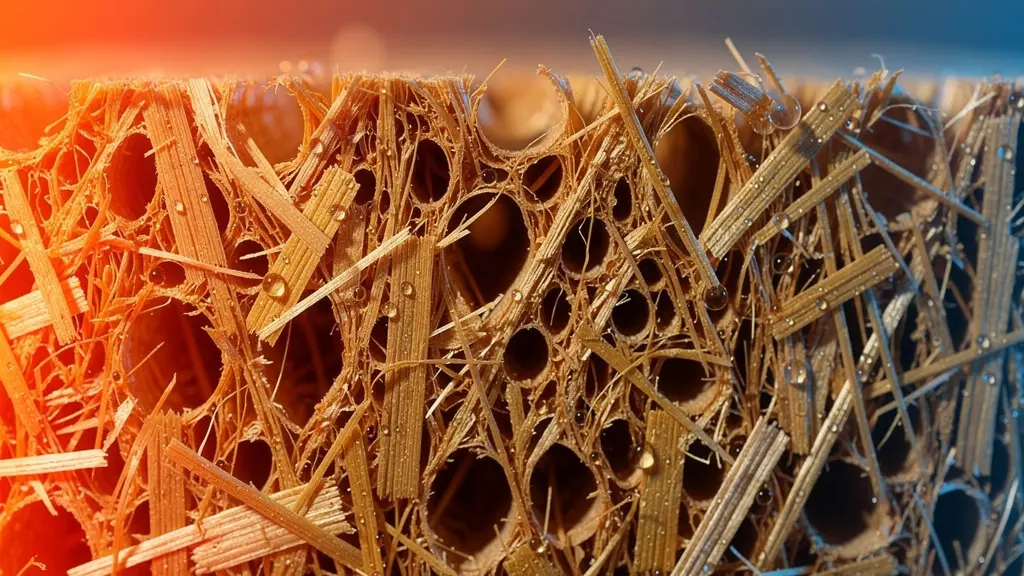
This principle is not new; it’s the same ancient wisdom used in Mediterranean stone farmhouses and Southwest adobe homes to stay cool without mechanical systems. As one case study on the topic explains, materials like wood fiber and hemp act as ‘thermal sponges,’ creating naturally comfortable buildings. This phase shift effect results in a home that stays significantly cooler during the hottest part of the day, reducing or even eliminating the need for air conditioning and providing a level of comfort that R-value alone can’t predict.
Why Seniors Need 3x More Light to Read and How to Provide It Without Glare?
While this question seems purely about lighting, its solution is deeply connected to the overall sensory environment of a home—an environment profoundly shaped by the materials used in its construction. As people age, their eyes require significantly more light to see clearly, but they also become more sensitive to glare. Creating a comfortable space is not just about adding brighter bulbs; it’s about managing how light, sound, and temperature interact with the surrounding surfaces. This is where a natural insulation system provides a suite of “invisible” benefits that are ideal for aging in place.
A home insulated with natural fibers and finished with natural plasters creates a holistic sensory environment that is inherently more comfortable. For instance, the high density of hemp or wool insulation provides exceptional acoustic dampening. One report on HempWool notes its NRC (Noise Reduction Coefficient) rating is similar to specialized acoustic materials, reducing background noise and making it easier for those with age-related hearing loss to concentrate. Furthermore, applying a natural hemp-lime plaster over the insulated walls creates a matte, textured surface that diffuses light softly, providing bright illumination without the harsh glare that comes from smooth, reflective synthetic paints.
By choosing a natural building system, you are inherently designing for well-being. The benefits include:
- Acoustic Comfort: Superior sound absorption reduces stress and improves concentration.
- Glare-Free Light: Matte, natural plaster finishes diffuse light for comfortable brightness.
- Stable Temperature: High thermal mass reduces temperature swings, preventing drafts or overheating.
- Optimal Air Quality: Hygroscopic materials buffer humidity, supporting respiratory health.
Why Is Acid Rain Dissolving Sandstone Facades 3x Faster than 50 Years Ago?
The image of acid rain slowly dissolving a historic facade is a powerful metaphor for a degenerative cycle. It represents a process where environmental factors cause irreversible decay. In the world of building materials, conventional synthetic insulations are part of a similar degenerative loop. They are petroleum-based, their production generates significant carbon emissions, and at the end of their life, they become landfill waste that degrades over centuries. When we choose these materials, we are participating in a system that takes, uses, and discards.
Natural materials like hemp offer a compelling alternative: a regenerative cycle. The choice of material can either contribute to environmental degradation or actively participate in its reversal. Hemp insulation, for example, begins its life as a plant that actively removes carbon from the atmosphere. In fact, environmental research shows that hemp sequesters an impressive 9 tons of CO2 per acre during its short growing season. This makes the raw material “carbon negative” before it’s even processed.
The regenerative process continues throughout the material’s life. Hempcrete, a mixture of hemp hurd and lime, actually petrifies over time, absorbing CO2 from the air to become harder and more durable. At the end of its very long life, natural fiber insulation can be composted and returned to the earth. This frames the choice of insulation not as a passive decision but as an active one: do you want a material that degrades and contributes to a problem, or one that regenerates and is part of the solution? By choosing natural fibers, you are creating a resilient ‘inner world’ for your home that is philosophically aligned with the health of the outer world.
Key Takeaways
- Natural fibers actively manage moisture (hygroscopic buffering), preventing the mold and rot where synthetic foams fail in older walls.
- True value lies in long-term performance (50+ year lifespan, better health) and summer cooling (thermal phase shift), not just upfront cost or winter R-value.
- Proper installation density is critical; natural fibers must be friction-fit with slight compression to prevent slumping and thermal gaps.
How to Renovate a Home for Aging Parents Without Making It Look Like a Hospital?
Renovating a home for aging parents often involves a delicate balance: providing necessary support without creating a sterile, clinical environment. The goal is a home that is safe, comfortable, and supportive, yet feels warm and psychologically nurturing. The typical approach involves adding visible aids like plastic grab bars and harsh lighting. However, a more profound and elegant solution lies in the “invisible care” provided by the home’s core materials.
By choosing a system of natural insulation and finishes, you embed health and comfort directly into the fabric of the building. The Building Biology Institute eloquently captures this idea, stating that natural materials provide support that is felt but not seen. As they explain in their factsheet on permeable walls:
Natural materials provide ‘invisible’ support. The superior acoustics of wool insulation reduce stress, the humidity-buffering of hemp-lime plaster supports respiratory health, and the thermal mass reduces temperature swings—all contributing to wellbeing without a clinical look.
– Building Biology Institute, Permeable Walls & Moisture Control Factsheet
This approach shifts the focus from adding adaptive gadgets to creating an inherently supportive space. You can integrate safety features beautifully, such as by incorporating sturdy grab bars into handsome wooden trim. You can leave a wall of textured hemp-lime plaster exposed as a warm, tactile design feature that also happens to purify the air. The stable temperatures reduce physical stress, while the quiet acoustics lower mental stress. The result is a home that cares for its inhabitants subtly and constantly, promoting well-being through its very atmosphere rather than through conspicuous medical equipment.
By understanding the dynamic systems at play, from moisture management to thermal phase shift, you can renovate your home to be more resilient, healthy, and comfortable. To apply these principles effectively to your specific project, the next logical step is to seek guidance from a professional who specializes in green building and natural materials.