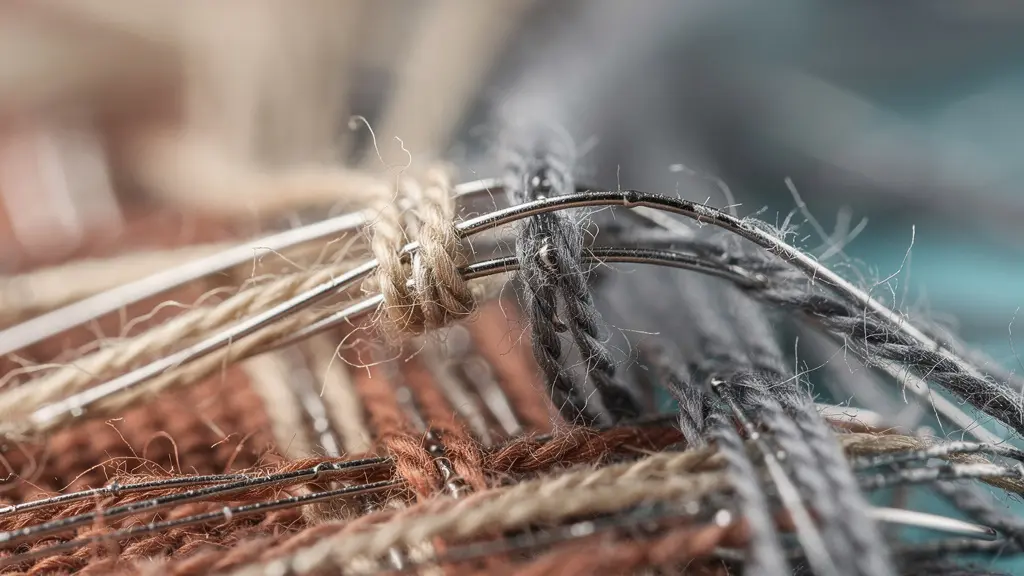
The failure of most smart garments isn’t a lack of features, but a failure of holistic engineering; true wearability is achieved by designing against specific stress points like circuit friction, thermal hotspots, and cognitive load.
- Effective design prioritizes invisible sensor integration and modular electronics (a “detachable brain”) to solve the critical challenges of aesthetics and washability.
- Material choice is paramount; fabrics like polyester blends and stretch knits protect circuits from the mechanical stress of daily use, directly impacting long-term durability.
Recommendation: Shift your focus from simply adding technology to a garment to engineering a cohesive system where the fabric, power, and electronics work in concert to enhance the human experience without creating discomfort.
For years, the promise of smart textiles has hovered on the horizon: clothes that monitor our health, adapt to the environment, and keep us connected. Yet, for every groundbreaking concept, the reality for the end-user is often a bulky, awkward, or delicate garment that gets worn once and then relegated to a drawer. The market is littered with wearables that win innovation awards but fail the most fundamental test: being genuinely wearable for more than a few hours. Designers and engineers often focus on the electronic function, assuming that using a soft fabric is enough to ensure comfort.
This approach misses the point entirely. The primary challenge isn’t a lack of technological capability, but a lack of integration expertise. Basic garment requirements, including breathability and durability, are frequently compromised by rigid components and fragile wiring. The industry’s obsession with adding features has come at the expense of the core human experience. A garment that feels like a piece of hardware, creates thermal hotspots, or demands constant attention is not the future of fashion; it’s a design failure.
But what if the solution wasn’t about better sensors or smaller batteries, but a radical shift in design philosophy? The key lies in moving from “adding tech to clothes” to “engineering a wearable system.” This involves treating the textile itself as an active component, designing for specific failure points like mechanical stress and wash cycles, and always prioritizing the user’s sensory experience. This article deconstructs this challenge, providing a blueprint for creating smart garments that are not only intelligent but also invisible, durable, and truly comfortable—the kind of clothing that seamlessly merges into our daily lives.
This guide breaks down the essential strategies for textile innovators, from concealing electronics to ensuring a prototype can survive its first wash. Explore the key considerations for building the next generation of wearable technology.
Summary: Engineering Wearable Technology for Daily Use
- Why do early smart garments fail the “wearability test” after 2 hours?
- How to conceal sensors invisibly so the garment looks like normal fashion?
- Solar fibers or kinetic harvesting: Which power source is viable for a standard jacket?
- The durability mistake that destroys smart circuits during the first machine wash
- How to build a functional smart textile prototype with a budget of under $500?
- Polyester blend or Cotton: Which fabric withstands the friction of daily folding and unfolding?
- NiMH vs. Lithium-Ion: Which battery chemistry survives freezing temperatures better?
- How to Design Consumer Electronics That Look Premium Without Overheating?
Why do early smart garments fail the “wearability test” after 2 hours?
The initial excitement of a smart garment often fades into discomfort within the first two hours of wear. This rapid failure is rarely due to a single flaw but a combination of overlooked ergonomic and psychological factors. The “wearability threshold” is crossed when the user’s awareness of the technology shifts from novel to nuisance. This is a critical failure point that extends beyond simple fabric choice. The core issues are physical discomfort, where rigid components chafe or restrict movement, and cognitive load, where the garment’s notifications or haptic feedback become a source of mental fatigue rather than a helpful tool.
Research into wearable systems highlights a crucial first step: the garment must be comfortable even *without* its electronic components. If the base layer’s fit, material, and construction are not optimized for extended wear, any added technology will only exacerbate the problem. Furthermore, the placement of sensors is a major contributor to discomfort. Innovative approaches show that certain technologies, like capacitive sensing, can be decoupled from the wearer’s body, offering greater flexibility and improving comfort without sacrificing data quality. This means designers are no longer forced to place a hard sensor directly against the skin.
Ultimately, a successful smart garment must respect the user’s physical and mental space. The design process must include a wearability assessment that actively monitors for signs of irritation and mental fatigue over time. If a user feels compelled to remove the garment because it’s physically annoying or mentally distracting, the technology, no matter how advanced, has failed its primary purpose. The goal is to create an experience so seamless that the user forgets the technology is even there.
How to conceal sensors invisibly so the garment looks like normal fashion?
The ultimate goal for any smart garment is aesthetic invisibility—it should look and feel like a piece of high-quality fashion, not a science experiment. Achieving this requires moving beyond attaching plastic modules and instead weaving technology directly into the fabric’s DNA. The key is to use the textile itself as the functional substrate. Advanced manufacturing techniques are making this more achievable than ever, allowing sensors and circuits to be integrated without compromising the garment’s drape, texture, or appearance.
For example, researchers at MIT have leveraged advanced knitting machines to create customizable, body-conforming textiles with integrated sensors. Instead of adding a sensor to a sock, the sock *is* the sensor. By using functional fibers and specific knit structures, they can create 3D-shaped fabrics that collect biomechanical data from pressure sensors that are an indistinguishable part of the textile. This approach eliminates the lumps and hard points that scream “technology” and cause discomfort.
Several methods exist for achieving this level of integration. The most common include using conductive textile yarns during the weaving, knitting, or embroidery process, essentially drawing circuits directly into the fabric. For more complex systems, fine conductive wires can be incorporated as interconnecting lines, or flexible circuits can be bonded to the textile using lamination techniques after fabrication. By combining these approaches, designers can create a hybrid system where commercial electronic components are seamlessly merged with fully textile-based functionalities, making the technology truly invisible to the eye and imperceptible to the touch.
Solar fibers or kinetic harvesting: Which power source is viable for a standard jacket?
A smart garment is useless without a reliable power source, yet bulky batteries and constant recharging remain significant barriers to adoption. The ideal solution is a power source that is as integrated and invisible as the sensors themselves. Energy harvesting—drawing power from the body or the environment—is the holy grail. For a standard jacket, the most promising options are solar fibers and kinetic harvesting, each with distinct advantages and limitations that make them suitable for different use cases.
This paragraph introduces the table below, which compares different energy harvesting technologies based on data from a recent analysis of self-powering wearables.
| Power Source | Output | Advantages | Limitations |
|---|---|---|---|
| Solar Fibers | 100x lighter than traditional cells | Continuous outdoor charging | Weather dependent |
| Kinetic Harvesting | Variable based on movement | Works during activity | Requires constant motion |
| Thermoelectric | 20 milliwatts per square meter | Uses body heat | Limited power output |
| Hybrid Systems | Combined output | Multiple sources for reliability | Complex integration |
As the data shows, there is no one-size-fits-all solution. Solar fibers, which can be woven directly into the fabric, are incredibly lightweight and offer continuous charging outdoors, but their performance is entirely dependent on weather and sunlight. Kinetic harvesting, which converts the wearer’s motion into energy, is excellent for activewear but generates little to no power when the user is sedentary. Other options, like thermoelectric generation (using body heat), provide a constant but very low power output. The most robust and forward-looking solution is often a hybrid system that combines multiple sources for greater reliability, though this adds complexity to the design.

Ultimately, the choice of power source must be driven by the garment’s intended function. A jacket for a cyclist could leverage both kinetic and solar energy, while a casual urban jacket might rely more on a highly efficient, low-profile battery supplemented by subtle solar fibers on the shoulders. The future lies in creating a balanced energy ecosystem within the garment itself.
The durability mistake that destroys smart circuits during the first machine wash
The single greatest durability challenge for smart textiles is washability. A garment that cannot be easily cleaned is not a viable consumer product. The most common mistake is designing the electronics as an inseparable part of the garment, exposing sensitive components like CPUs and batteries to the harsh mechanical and chemical stresses of a washing machine. This oversight can permanently destroy the circuitry in a single cycle, rendering the entire garment useless. Even with advanced encapsulation, some components are simply not meant to be submerged and tumbled.
The most effective engineering solution is a modular design philosophy, often referred to as the “detachable brain” concept. This strategy involves separating the non-washable core electronics—typically the processor and battery—into a small, removable module. The garment itself contains only the washable components: the textile-based sensors and conductive pathways. This approach allows the user to easily pop out the “brain” before washing, ensuring the longevity of the most expensive and delicate parts. While this requires careful connector design, it is the most pragmatic approach to creating truly user-friendly, washable smart clothing. Durability is possible, as research from Cambridge University demonstrates circuits that can withstand 8,000 bending cycles with no performance change when designed correctly.
Beyond modularity, protecting the integrated textile circuitry is also vital. This involves using stretchable polymer optical fiber sensors embedded in robust fabrics like neoprene, which can handle mechanical stress. Another key technique is protective polymer encapsulation, where a thin, flexible coating is applied over conductive traces to shield them from water and detergent. By combining a detachable core with robust, protected textile circuits, designers can finally create smart garments that are as easy to care for as they are to wear.
Action Plan: Modular Design for Washable Smart Garments
- Design with the ‘detachable brain’ concept: create a separate, non-washable module for the CPU and battery that can be easily removed from the garment before washing.
- Implement a sacrificial connector strategy: design low-cost, replaceable connectors between the main electronics module and the textile components to handle wear and tear.
- Embed highly stretchable sensors: use components like polymer optical fiber sensors integrated into flexible fabrics such as neoprene to withstand stretching and washing.
- Apply protective polymer encapsulation: coat all embedded circuits and connections with a waterproof, flexible polymer to shield them from moisture and detergents during washing cycles.
- Use an intensity variation sensing principle: develop fully portable and low-cost sensors that are inherently more robust and less susceptible to water damage.
How to build a functional smart textile prototype with a budget of under $500?
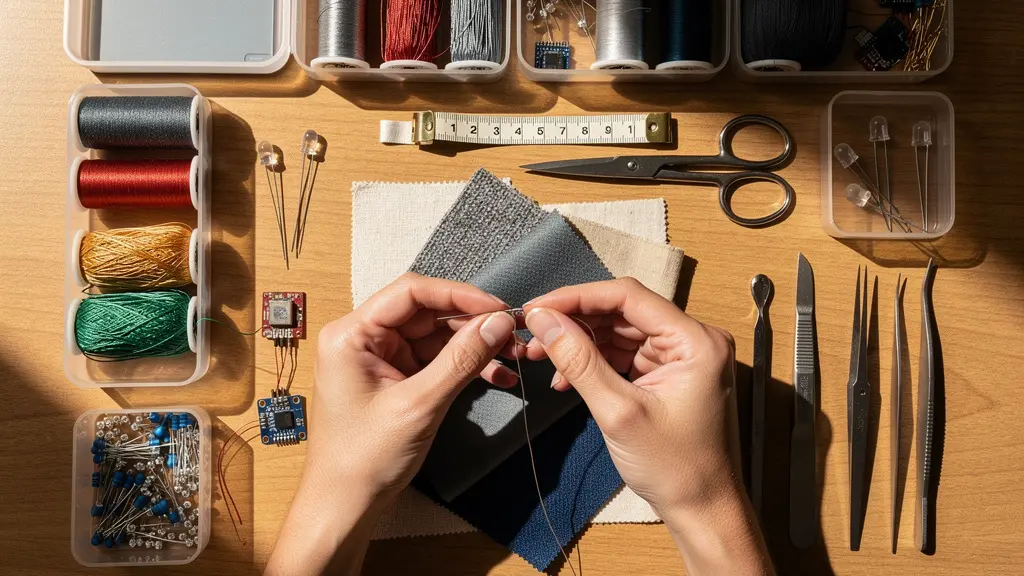
Prototyping smart textiles can seem like an expensive endeavor reserved for large R&D labs, but creating a functional proof-of-concept is achievable on a surprisingly small budget. The key is a lean, focused approach that prioritizes the core user experience over feature-heavy complexity. Forget about creating a market-ready product in the first iteration; the goal is to test a single, high-impact idea effectively and affordably.
The most important rule of budget prototyping is to perfect the “dumb” garment first. Before a single wire is stitched, the garment itself must be comfortable, well-fitting, and suited to its purpose. A significant portion of your initial budget should be allocated to fabric and construction. Once the base garment is perfected, you can begin integrating electronics. To test the user experience before writing complex code, use the “Wizard of Oz” technique: manually trigger outputs (like a light or vibration) in response to a user’s action to see if the interaction feels intuitive and valuable. This costs nothing but provides invaluable feedback.
When it comes to materials, start simple. Basic conductive thread and simple sensors (like flexible resistors or capacitive touch pads) are inexpensive and readily available. As demonstrated by companies like BeBop Sensors, which rapidly prototyped 15 different sensors in 30 weeks, cost-effective materials are key. They leverage materials like nonwoven felts and nylon, which are uniform, don’t fray, and can be easily laser-cut, making them ideal for quick and affordable iterations. This lean methodology proves that innovation doesn’t always require a massive budget, but rather a clever and disciplined process.
By focusing on a single feature, perfecting the base garment, and using smart, low-cost techniques, a team can validate a powerful concept for under $500. This builds a strong foundation for seeking further investment, armed with a functional prototype that demonstrates real-world value.
Polyester blend or Cotton: Which fabric withstands the friction of daily folding and unfolding?
The choice of base fabric in a smart garment is not merely an aesthetic decision; it’s a critical engineering choice that directly impacts the longevity of the embedded electronics. Every time a garment is folded, stretched, or worn, the fabric’s fibers move against the conductive threads of the circuit. This creates microscopic friction that, over time, can abrade the conductive coating and cause a circuit failure. Different fabrics interact with these threads in vastly different ways, making material selection a crucial factor in durability.
To illustrate these differences, the following table compares the performance of common fabric types for smart textile applications, based on a detailed study of fabric-circuit interaction.
| Fabric Type | Flexibility | Circuit Protection | Best Use Case |
|---|---|---|---|
| Polyester Blend | Smooth filament reduces abrasion | Better gliding over conductive threads | High-movement applications |
| Cotton | Coarse staple fibers | Higher friction on circuits | Comfort-priority designs |
| Stretch Knits | Maintains fabric flexibility while withstanding mechanical deformations | Accommodates folding by stretching | Athletic and form-fitting wear |
| Woven Fabrics | Rigid structure | Forces circuit to take full stress | Structured garments |
As the comparison reveals, fabrics made from smooth, continuous filaments like polyester blends offer superior protection for circuits. Their smooth surface allows conductive threads to glide with minimal abrasion, making them ideal for applications with frequent movement. In contrast, natural staple fibers like cotton, while prized for comfort, have a rougher texture at a microscopic level. This creates higher friction, which can slowly wear down circuits over repeated cycles of folding and unfolding.
For applications requiring high flexibility, stretch knits are an excellent choice. Their looped structure allows the fabric to stretch and deform without placing direct stress on the embedded circuitry. The circuit moves *with* the fabric rather than fighting against it. Conversely, rigid woven fabrics offer the least protection, as they force the delicate circuit to absorb the full stress of any bending or folding. Therefore, the decision must balance comfort, aesthetics, and the primary enemy of embedded circuits: friction.
NiMH vs. Lithium-Ion: Which battery chemistry survives freezing temperatures better?
A smart garment designed for outdoor or athletic use must perform reliably across a wide range of temperatures. While much attention is paid to battery capacity and size, its chemical stability in cold weather is a frequently overlooked but critical factor for usability. Standard Lithium-Ion (Li-ion) and Lithium-Polymer (Li-Po) batteries, favored for their high energy density and flexible form factors, suffer from a significant drop in performance at or below freezing temperatures. Their internal resistance increases, drastically reducing their ability to deliver power and potentially shutting down the device altogether.
While NiMH (Nickel-Metal Hydride) batteries historically perform slightly better in cold, they are bulky and have a lower energy density, making them a poor fit for sleek, modern wearables. The more practical solution isn’t to change the chemistry, but to engineer a system that protects the existing Li-ion battery from the cold. The most effective strategy is strategic placement: positioning the battery in an inner pocket or layer of the garment, close to the wearer’s core. This uses the body’s own heat to keep the battery within its optimal operating temperature range.
Advanced strategies can supplement this approach. Designers can implement a “Cold Weather Safe Mode” in the firmware, which automatically shuts down non-essential, power-hungry functions when extreme cold is detected, preserving power for core operations. Furthermore, building thermal insulation layers around the battery compartment can help retain heat. The future may lie in entirely new form factors, such as the battery fibers being developed at Johns Hopkins APL, which are designed to be woven directly into textiles and have shown remarkable durability. However, for today’s designers, the key to cold-weather reliability is smart thermal management and placement.
Key Takeaways
- Wearability is an engineering discipline focused on eliminating specific failure points (physical, cognitive, and durability) rather than just choosing soft materials.
- True integration means making technology invisible. Use advanced knitting, conductive yarns, and lamination to build electronics directly into the textile’s structure.
- Solving the washability problem is non-negotiable. The “detachable brain” (modular electronics) is the most pragmatic and reliable strategy for consumer-grade smart garments.
How to Design Consumer Electronics That Look Premium Without Overheating?
The final hurdle in creating desirable smart clothing is marrying advanced functionality with a premium aesthetic, a challenge that is often compromised by a final, invisible enemy: heat. Electronic components, especially processors and power regulators, generate heat during operation. In a poorly designed garment, this can create uncomfortable “thermal hotspots” that not only feel unpleasant against the skin but also serve as a constant, physical reminder of the embedded technology, shattering the illusion of a normal piece of clothing.
Achieving a premium look and feel requires a design that manages heat dissipation passively and invisibly. A brilliant example is the prototype jacket from Aalto University, where a solar cell was hidden underneath the textile. The team meticulously optimized the fabric to allow enough light to pass through for power generation while simultaneously allowing heat to escape. This demonstrates a core principle: the textile itself must be part of the thermal management system. Using breathable fabrics or incorporating micro-perforations in strategic, non-visible areas can significantly improve airflow and prevent heat buildup.
Furthermore, advanced materials can actively regulate temperature. Technologies like those developed by Outlast, which use phase-change materials (PCMs), can absorb, store, and release heat to maintain a comfortable microclimate next to the skin. These smart textiles can lead to a demonstrable improvement in comfort, with some applications achieving up to a 48% reduction in sweat production. By combining thoughtful component placement, breathable base fabrics, and active thermal regulation technologies, designers can create electronics that not only look premium but feel comfortable, even during extended use. This holistic approach is the final step in creating technology that truly disappears into the fabric of our lives.
By shifting from a feature-first mindset to a human-centric engineering approach, the path to creating truly desirable and functional smart clothing becomes clear. The next step is to apply these principles to your own design and prototyping process.