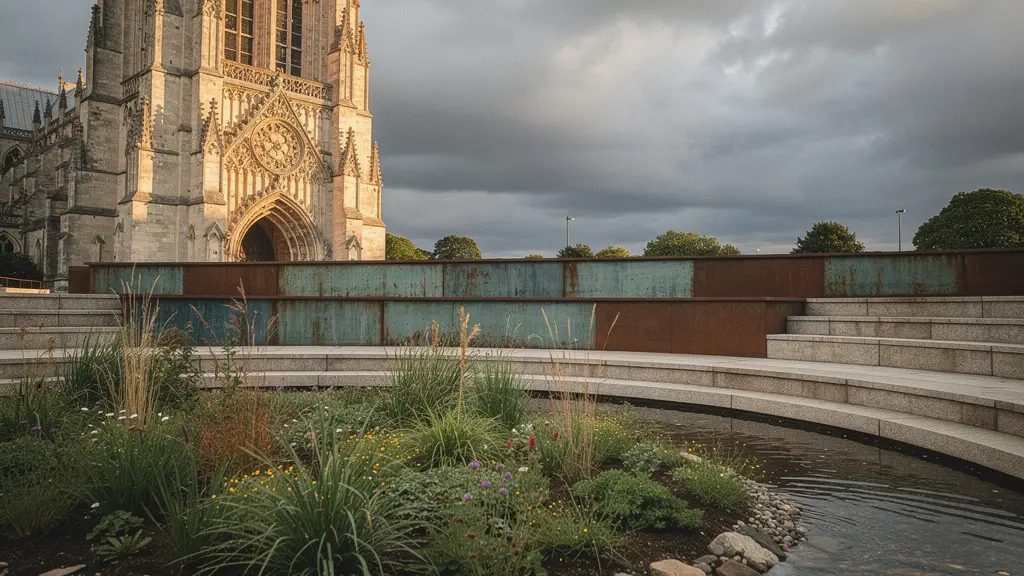
Effective flood adaptation for heritage sites demands moving beyond brute-force barriers to a diagnostic-led strategy that enhances inherent resilience without sacrificing aesthetic integrity.
- Interventions must be preceded by material analysis and predictive digital modeling to target vulnerabilities.
- Solutions should prioritize reversibility and aesthetic concealment, integrating with the historic landscape.
Recommendation: Adopt a multi-layered approach combining material science, invisible engineering, and predictive analytics to create resilient monuments that remain culturally legible for future generations.
As conservation architects, we face an escalating and existential threat: the steady, inexorable increase in flood events that endanger the very fabric of our shared global heritage. The immediate, panicked response is often to propose modern, brute-force solutions—concrete flood walls, impermeable coatings, and drastic alterations. These measures, while seemingly effective, frequently inflict a secondary, irreversible damage by destroying the historic character, material authenticity, and aesthetic legibility of the site we are trying to protect. They save the structure but erase its soul.
But what if the most advanced approach wasn’t about imposing new defenses, but about deeply understanding and augmenting a monument’s inherent ability to withstand environmental stress? The real challenge lies in a more nuanced, surgical intervention. The key is to shift our thinking from reactive fortification to proactive, diagnostic-led preservation. This involves a multi-layered strategy that integrates cutting-edge material science, predictive digital modeling, and subtly integrated engineering that works with, not against, the historic fabric.
This guide will not offer simple, one-size-fits-all answers. Instead, it will outline a professional framework for making informed, preservationist-minded decisions. We will explore the chemical assault of acid rain, analyze the aesthetic trade-offs of different barrier types, delve into the power of digital twins for predictive analysis, and examine the critical financial and logistical protocols that underpin any successful resilience strategy. It is a call to action to defend our heritage with intelligence, foresight, and a profound respect for its integrity.
This article details a comprehensive methodology for adapting historic sites to climate change. The following summary outlines the key pillars of this diagnostic-led and preservation-focused approach.
Summary: A Preservationist’s Framework for Flood-Risk Retrofitting
- Why is acid rain dissolving sandstone facades 3x faster than 50 years ago?
- Demountable barriers or Landscape grading: Which flood protection alters the site aesthetics less?
- How to use laser scanning to detect millimeter shifts in foundations during droughts?
- The “act of God” clause that leaves heritage sites uninsured against climate events
- When to trigger the evacuation protocol: The decision matrix for rising water levels
- The structural maintenance mistake that ruins stone facades within 10 years
- Is it a high water table or just surface runoff (and why it matters)?
- How to Design a Landscape That Solves Backyard Flooding Issues?
Why is acid rain dissolving sandstone facades 3x faster than 50 years ago?
The acceleration of facade decay is not merely weathering; it is a chemical assault intensified by climate change. Increased atmospheric moisture and pollutants combine to form acid rain with devastating effects on carbonate-based stones like limestone and sandstone. In some cases, measurements from industrial zones show acid rain with a pH as low as 2.4, drastically more acidic than normal rain’s 5.6 pH. This acidic solution directly dissolves the calcite bonds that hold the stone’s granular structure together, effectively turning a solid facade into a fragile, crumbling surface.
The primary vulnerability is not the stone type itself, but its internal structure. As recent research published in Scientific Reports reveals, stone porosity is the single most influential factor in the extent of acid rain damage. A highly porous stone acts like a sponge, drawing acidic water deep into its core. This maximizes the surface area for chemical reactions and, during freeze-thaw cycles, leads to catastrophic internal pressures that cause spalling and delamination. Understanding a facade’s specific porosity is therefore the first critical diagnostic step before any treatment is considered.
Countermeasures must be equally scientific. Prophylactic strategies involve the application of sacrificial and reversible consolidants that strengthen the stone’s matrix without sealing it. Silane-based water repellents can also be used to reduce water ingress, but they must be vapor-permeable to prevent trapping moisture within the wall. This diagnostic-led approach, focusing on the “why” of decay, allows for targeted, minimalist interventions that preserve the maximum amount of original historic fabric, a core tenet of modern conservation.
Demountable barriers or Landscape grading: Which flood protection alters the site aesthetics less?
When direct flood intervention is unavoidable, the preservationist’s primary concern shifts to aesthetic and historical legibility. The choice of protection method carries profound consequences for a site’s character. Demountable barriers, while effective for specific flood heights, often require permanent anchor points and post-sockets that create a constant, visible scar on the historic landscape. Even when the barriers are stored away, their physical footprint remains, disrupting the site’s authentic appearance and introducing a modern element that can be visually jarring.
A more integrated and aesthetically sensitive approach often involves landscape grading. This technique subtly re-contours the land around a monument to direct surface runoff away from vulnerable areas. When designed by a sensitive landscape architect, these changes can be nearly imperceptible, blending seamlessly into the existing topography or even enhancing it by clarifying historic sight lines. Other “invisible” solutions, such as retractable flood walls that rise from the ground only when needed, offer the highest level of protection with zero daily visual impact, though at a significantly higher cost.
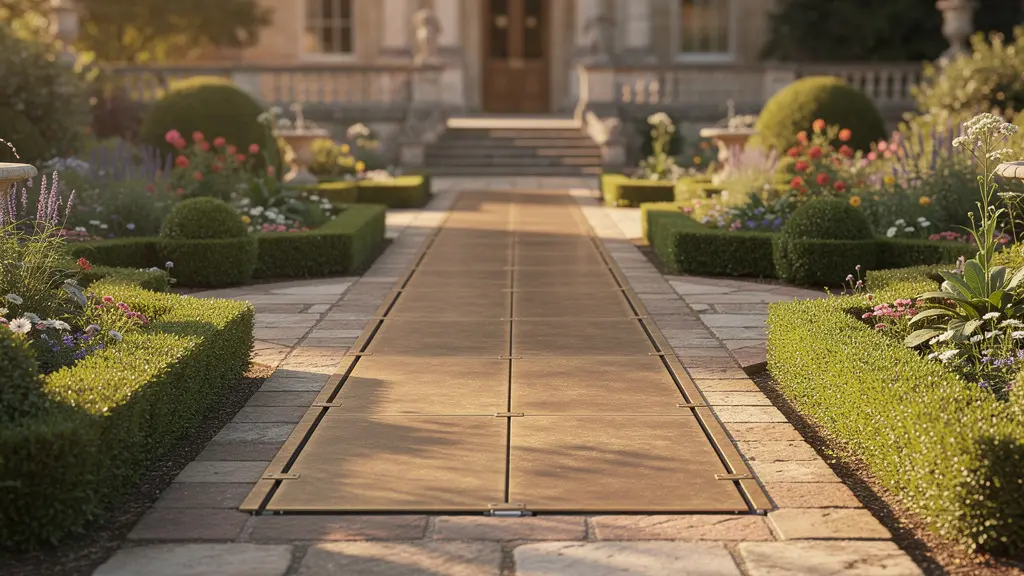
The decision requires a careful analysis of trade-offs, balancing effectiveness, cost, and, most importantly, the degree of permanent alteration to the site’s character. The goal is always to find the solution with the highest possible degree of reversibility and minimal aesthetic intrusion. The following table compares common methods along these critical axes.
| Protection Method | Aesthetic Impact | Reversibility | Effectiveness |
|---|---|---|---|
| Demountable Barriers | Anchor points create permanent visual intrusion | Physically removable but leaves scarring | High for specific flood heights |
| Landscape Grading | Can be imperceptible when sensitively designed | Difficult to reverse but blends naturally | Effective for surface runoff management |
| Retractable Flood Walls | Invisible until deployed | Fully reversible when underground | Very high but expensive |
| Automated Flood-proof Windows/Doors | Maintains daily aesthetic integrity | Can be removed with building restoration | High for building envelope protection |
How to use laser scanning to detect millimeter shifts in foundations during droughts?
The most advanced conservation is predictive, not reactive. Modern remote sensing technologies, particularly terrestrial laser scanning (LiDAR), have revolutionized our ability to monitor structural health with millimeter accuracy. This is not just for post-disaster assessment; its real power lies in establishing a high-resolution baseline of a monument’s condition. By creating a “digital twin”—a precise 3D point cloud model—we can track infinitesimal changes over time caused by factors like foundation subsidence during droughts or soil saturation during floods.
Differential analysis is key. By comparing a new scan against the baseline digital twin, we can generate 3D displacement maps that highlight areas of movement, deformation, or material loss long before they are visible to the naked eye. This data allows architects to identify stress patterns and structural weak points pre-emptively. It transforms building maintenance from a cyclical, often cosmetic, activity into a targeted, data-driven surgical intervention.
Case Study: Predictive Conservation at Sucevita Monastery
As detailed in research on UNESCO World Heritage sites like the Sucevita catchment monasteries in Romania, pre-existing laser scan data enables the creation of digital twins for sophisticated hydrodynamic simulations. These models are used to analyze the effects of hydrostatic pressure during potential flood events, identifying structural weak points before they fail. The same differential scanning method creates millimeter-accurate maps of erosion and material displacement, providing undeniable evidence for targeted repair plans and insurance claims, turning predictive data into actionable preservation.
This diagnostic-led process allows for the most efficient allocation of limited conservation funds, focusing resources where the risk is greatest. For site managers and architects, implementing a 4D laser scanning protocol is no longer a luxury but a fundamental component of responsible stewardship.
Action Plan: Implementing a 4D Laser Scanning Protocol
- Establish Baseline Data: Conduct a comprehensive laser scan of the entire site during stable, dry conditions to create the initial point cloud.
- Create Digital Twin: Process the point cloud data to generate a high-fidelity 3D model that serves as the definitive structural benchmark.
- Conduct Differential Scanning: Perform subsequent scans at regular intervals or after significant weather events (floods, droughts) and compare them to the baseline model.
- Generate Displacement Maps: Use specialized software to create color-coded 3D maps that visualize millimeter-level shifts, subsidence, or material loss.
- Integrate Subsurface Data: Combine LiDAR surface data with Ground-Penetrating Radar (GPR) to model the impact of soil saturation and groundwater shifts on the foundations.
The “act of God” clause that leaves heritage sites uninsured against climate events
Physical defenses are only one part of a resilient strategy; financial preparedness is equally critical. Unfortunately, many heritage sites operate under a dangerous misconception about their insurance coverage. Standard commercial property policies frequently contain “act of God” or flood exclusion clauses, leaving institutions financially exposed to the very events that are becoming more frequent and severe. With nearly 15 million properties facing substantial flood risk in the United States alone, assuming coverage exists is a catastrophic mistake.
Site managers must conduct an urgent and thorough review of their insurance policies with a broker specializing in cultural properties and climate risk. This audit should identify specific exclusions and determine the financial gap between potential damages and actual coverage. In many cases, securing adequate protection requires purchasing separate, specialized flood insurance policies, which can be prohibitively expensive. This reality underscores the urgent need for proactive physical retrofitting, as demonstrating a commitment to risk mitigation can sometimes lower insurance premiums.
Beyond traditional insurance, innovative financing mechanisms are emerging to fund these crucial resilience upgrades. As the Urban Land Institute points out, these tools can bridge the significant upfront capital gap that often prevents institutions from acting.
Property Assessed Clean Energy (PACE) financing provides upfront capital at long-term, low-interest terms and is increasingly being used for resilience strategies.
– ULI Urban Resilience Program, Resilient Retrofits: Climate Upgrades for Existing Buildings
Exploring options like PACE financing, resilience bonds, or government grants for climate adaptation is no longer an ancillary task but a core responsibility of heritage site management. A resilient monument is one that is not only physically robust but also financially secured against the certainty of future climate shocks.
When to trigger the evacuation protocol: The decision matrix for rising water levels
When protective measures are overwhelmed and flooding is imminent, a clear, pre-defined evacuation protocol is the last line of defense for a site’s most valuable and movable heritage assets. The decision to trigger this protocol cannot be made in the heat of a crisis. It must be based on a tiered warning system and a rational decision matrix that removes emotion and guesswork from the process. An effective protocol translates meteorological forecasts into specific, actionable steps for staff.
A best-practice model is a tiered warning and action system tied to flood forecasts. For example: a “Code Yellow” at 72 hours might trigger the review of emergency plans and the securing of basement archives. A “Code Orange” at 24 hours could initiate the installation of demountable barriers and the movement of top-priority collections to higher ground. A “Code Red” signifies imminent flooding and commands the full evacuation of all designated heritage objects. Regular, role-playing drills are essential to ensure that every staff member understands their specific responsibilities at each stage.
Deciding what to save first requires a brutal but necessary triage. Objects should be ranked using a matrix that multiplies their Cultural Value (CV) by their Vulnerability (V) and divides by their Evacuation Difficulty (ED). This prioritizes objects that are both critically important and highly susceptible to damage, yet are realistically movable. Sometimes, the most valuable lessons in resilience come from studying historic buildings themselves, which often had adaptive strategies built in.
The Merchant Adventurers’ Hall in York, for instance, demonstrated this principle of “inherent resilience” after severe flooding in 2015. Its robust stone floors and traditional layout—with valuable activities on upper floors and storage on lower floors—were designed for periodic inundation. This historic model allowed for a remarkably quick recovery, teaching modern managers that traditional building patterns are a valuable source of knowledge for developing flood-adaptive protocols.
The structural maintenance mistake that ruins stone facades within 10 years
One of the most common and destructive maintenance errors in historic masonry is the use of modern Portland cement for repointing instead of traditional lime-based mortars. This mistake, often made with good intentions for a “stronger” repair, sets in motion a cycle of decay that can cause irreversible damage to stone facades within a decade. The fundamental problem lies in a misunderstanding of how historic walls function: they are designed to “breathe.”
Traditional lime mortar is soft, porous, and vapor-permeable. It allows moisture that enters the wall to evaporate back out, preventing water from becoming trapped. Crucially, it is also “sacrificial”—it is weaker than the surrounding stone, so it will crack and fail first under stress, absorbing pressure and protecting the more valuable masonry units. Portland cement is the opposite: it is extremely hard, dense, and impermeable. When used to repoint a historic wall, it creates a rigid grid that traps moisture behind it.
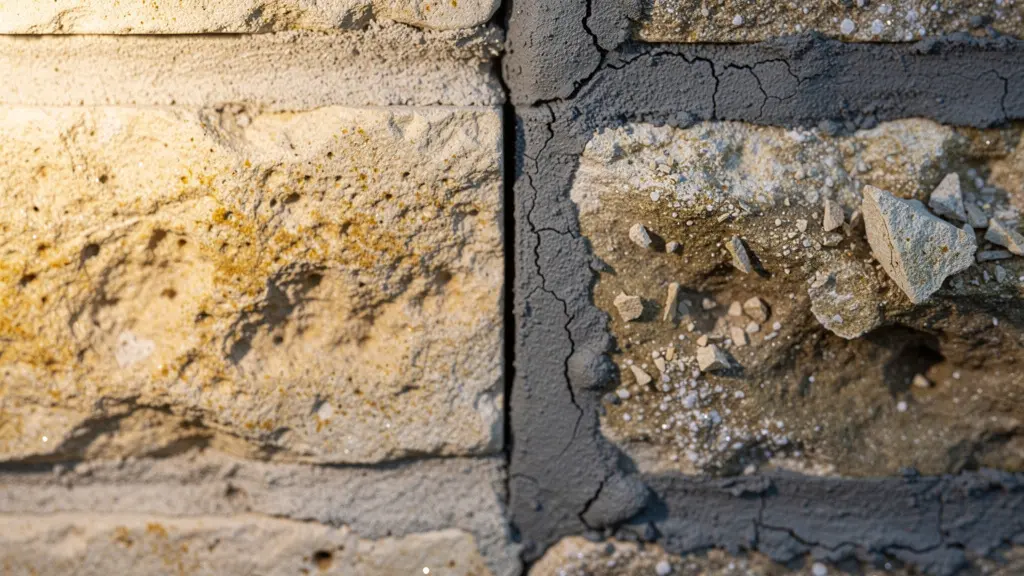
During a freeze-thaw cycle, this trapped water expands, but because the cement joints are stronger than the stone, the pressure is exerted on the stone itself, causing its face to pop off—a phenomenon known as spalling. The cement effectively turns the mortar joints into a network of dams, leading to water saturation, salt crystallization, and the rapid disintegration of the very fabric it was meant to repair. Furthermore, post-flood cleaning with high-pressure water jets exacerbates this issue, driving water deeper into the already compromised wall. Proper maintenance requires adhering strictly to traditional, breathable materials that work in harmony with the historic structure.
Is it a high water table or just surface runoff (and why it matters)?
Before any intervention is planned, a crucial diagnosis must be made: is the water problem caused by surface runoff from heavy rainfall, or is it due to a rising groundwater table? The answer dictates the entire flood mitigation strategy, and misdiagnosing the source leads to expensive and ineffective solutions. The scale of this issue is immense; Historic England reports that currently 400,000 homes and 75,000 businesses in England are located in areas with a significant annual probability of flooding, a problem compounded by both sources.
Surface runoff is episodic and relates directly to storm events. It is a problem of water management across the landscape. Solutions typically involve re-grading the land, installing French drains, creating bioswales, or using permeable paving to slow down and redirect the flow of water away from the building’s foundation. The intervention is focused on the building’s immediate surroundings. It is a kinetic problem—managing water in motion.
A high water table, however, is a much more persistent and insidious threat. It signifies that the ground itself is saturated, leading to constant hydrostatic pressure against basement walls and foundations. This is a static problem—managing water that is already there. Interventions are far more invasive and focus on the building envelope itself. They may include installing interior drainage systems, sump pumps, or applying waterproof membranes to the foundation—all of which are highly intrusive in a historic context. Differentiating between the two requires professional analysis, including studying geological surveys, monitoring seasonal water levels with piezometers, and observing the building’s behavior after different types of weather events.
Key Takeaways
- Diagnosis Before Action: Always begin by understanding the specific material vulnerabilities (e.g., stone porosity) and the precise water source (runoff vs. groundwater) before selecting a solution.
- Prioritize Reversible, Invisible Interventions: Favor solutions like sensitive landscape grading and concealed barriers that protect the site without permanently scarring its aesthetic or historical character.
- Leverage Digital Prediction: Use technologies like laser scanning and digital twins not just to document damage, but to predict structural stress and pre-emptively target interventions.
How to Design a Landscape That Solves Backyard Flooding Issues?
For a historic monument, the surrounding landscape is not merely a “backyard”; it is an integral part of its character, setting, and historical narrative. The most elegant and preservationist-minded flood solutions are often those that are integrated directly into a resilient landscape design. Rather than erecting walls to fight water, this approach seeks to manage it, slow it down, and absorb it in a way that is both functional and beautiful. As the National Park Service notes, site-level interventions can be highly effective and aesthetically pleasing.
The key is to adapt historic landscape features for modern water management. A dry moat, for instance, can be re-engineered to serve as a temporary retention basin during a flood. Historic terraces can be subtly re-graded to hold and slow water. New elements can be designed to echo historical forms; a large-scale bioswale can be aligned with a historic pathway or sight line, while a new rain garden can be planted exclusively with period-appropriate and water-loving native species. Even drainage channels can be designed as artistic water rills that enhance the site’s aesthetics.
This strategy transforms a problem into an amenity. A retention pond, necessary for holding storm surge, can be designed as an ornamental water garden that increases biodiversity and adds to the visitor experience. Permeable paving, essential for reducing runoff, can be executed with historic-style cobbles or bricks, maintaining the site’s authentic feel while providing a crucial function. By weaving storm-water management directly into the fabric of the landscape, we uphold the preservationist principle of making interventions that are both effective and respectful of the site’s integrity, creating a resilient system that protects the monument from within.
The time for reactive, piecemeal measures is over. As stewards of cultural heritage, the professional and ethical imperative is to adopt a proactive, diagnostic-led, and integrated approach to climate resilience. Begin today by initiating a comprehensive risk assessment of your site, not as a bureaucratic exercise, but as the first step toward securing its future.