Interior design
Interior design has evolved far beyond aesthetics and style preferences. Today, it represents a multidisciplinary field where psychology, physiology, environmental science, and technology converge to create spaces that actively support human well-being. Every decision—from furniture placement to lighting temperature—carries tangible consequences for mental clarity, physical health, energy consumption, and daily comfort.
Whether you’re navigating the constraints of a compact urban apartment, designing a home office that protects your spine, or preparing your living space for long-term accessibility, the principles remain consistent: intentional design creates environments that work with your body and mind, not against them. This comprehensive resource introduces six foundational pillars of contemporary interior design, each addressing distinct yet interconnected aspects of how we inhabit our spaces.
Psychology and Spatial Well-Being
The relationship between our surroundings and mental state operates constantly, often below conscious awareness. Research consistently demonstrates that spatial layout directly influences stress hormones, with cluttered environments elevating cortisol levels and impairing cognitive function. Understanding this connection transforms interior design from decoration into a mental health strategy.
Understanding the Mental Impact of Layout
Small urban apartments present unique psychological challenges. When square footage is limited, poor layout creates a sensation of confinement that goes beyond physical space. The key lies in visual flow—arranging furniture to create clear sightlines that allow the eye to travel unobstructed across a room. This perceptual trick convinces the brain that space is more generous than measurements suggest. Mirrors positioned opposite windows amplify natural light while doubling perceived depth, a simple intervention with disproportionate psychological returns.
Decluttering for Mental Clarity
Clutter operates as visual noise, each object demanding a fraction of attentional resources. Establishing a maintenance decluttering schedule—rather than sporadic purges—prevents accumulation before it becomes overwhelming. Consider implementing these practical rhythms:
- Daily: Clear horizontal surfaces (counters, tables, desks) before bed
- Weekly: Rotate through one category (clothing, books, kitchen items)
- Seasonal: Deep assessment of stored items and sentimental objects
Zoning Strategies for Multi-Function Spaces
When a single room must accommodate sleeping, working, and leisure, psychological zoning becomes essential. Physical dividers aren’t always necessary—strategic lighting, area rugs, and furniture orientation can create distinct mental zones. A desk facing away from the bed reinforces work-rest boundaries, while adjustable lighting allows the same space to shift between focused task mode and relaxed evening ambiance. The goal is training your brain to recognize contextual cues that signal different behavioral modes.
Ergonomics and Physical Health
Sedentary work has transformed musculoskeletal health into a design priority. Home office setups, often improvised from existing furniture, frequently violate basic ergonomic principles, leading to chronic pain that develops gradually over months. Optimizing your workspace requires understanding how your skeleton and muscles function during prolonged sitting.
The Foundation: Neutral Spine Position
The neutral spine maintains the natural S-curve of your vertebral column—slight inward curve at the lower back, outward at the upper back, inward again at the neck. This alignment distributes weight evenly across spinal discs, preventing the compression that causes pain. When sitting, your lower back should contact chair support, shoulders should stack over hips, and ears should align with shoulders. Many people unconsciously collapse into a C-curve, especially as fatigue sets in throughout the workday.
Calibrating Your Workspace
Proper calibration follows a specific sequence:
- Chair height: Feet flat on floor, knees at 90-degree angles, thighs parallel to ground
- Monitor distance: Arm’s length away, top of screen at or slightly below eye level
- Keyboard position: Elbows at 90 degrees, wrists straight and floating above the desk
- Mouse placement: Immediately beside keyboard to prevent shoulder rotation
Investing in adjustable components—particularly chair height and armrests—accommodates different body proportions more effectively than fixed furniture. Task chairs with lumbar support adjustment allow fine-tuning as your posture changes throughout the day.
Movement and Break Protocols
Even perfect static posture creates problems. The human body requires regular movement to pump fluid through spinal discs and prevent muscle fatigue. Scheduling micro-breaks every 30-40 minutes—standing, stretching, or walking for just two minutes—significantly reduces discomfort. Consider using phone notifications or desktop software that enforces these intervals until the habit becomes automatic.
Sustainable Insulation and Thermal Comfort
Thermal comfort affects both environmental footprint and daily quality of life. Traditional insulation materials often carry significant embodied carbon and can introduce indoor air quality concerns. Natural alternatives increasingly offer comparable performance while addressing moisture management and lifecycle sustainability.
Natural Materials and Moisture Balance
Materials like sheep’s wool, cellulose, and hemp fiber provide insulation while actively regulating indoor humidity. Unlike synthetic foam that creates vapor barriers, these materials absorb excess moisture when humidity rises and release it when air becomes dry. This hygroscopic property prevents the condensation issues that lead to mold growth, particularly important in climates with significant temperature fluctuations. Wool insulation naturally resists fire without chemical treatments, while cellulose—made from recycled paper—offers excellent soundproofing as a secondary benefit.
Calculating Long-Term Value
Natural insulation typically costs 15-30% more upfront than fiberglass batts, but return on investment depends on multiple factors beyond immediate energy savings. Consider durability—wool maintains performance for decades without settling or degrading. Factor in health benefits if occupants have chemical sensitivities. Include potential property value increases as sustainability becomes a market differentiator. When heating and cooling costs represent a substantial portion of monthly expenses, payback periods often fall within 5-8 years, after which savings accumulate indefinitely.
Installation Considerations
Loose-fill insulation requires specific techniques to achieve rated R-values. Uneven distribution creates thermal bridges where heat escapes, negating much of the investment. Professional installation with calibrated blowing equipment ensures consistent density, while DIY approaches risk both under-filling (poor performance) and over-compressing (reduced air pockets that provide insulation). For summer heat management, combine wall insulation with radiant barriers in attics to reflect infrared radiation before it enters living spaces.
Smart Lighting and Home Automation
Lighting profoundly influences both energy consumption and biological rhythms. Automated systems, once prohibitively complex, now offer accessible entry points that simultaneously reduce electricity waste and support natural sleep-wake cycles. The key lies in understanding what you’re optimizing for beyond simple convenience.
Circadian-Aligned Lighting
Human biology evolved under predictable light patterns—blue-rich daylight signaling alertness, warm amber tones indicating evening rest. Modern lighting disrupts these cues, suppressing melatonin production and degrading sleep quality. Circadian lighting systems automatically shift color temperature throughout the day: cool white (5000-6500K) during morning and midday hours to support focus, transitioning to warm tones (2700-3000K) as evening approaches. This programming can reduce the time required to fall asleep by 15-20 minutes while improving sleep depth, measurable through next-day alertness.
Energy Efficiency and Security
Smart lighting eliminates the phantom energy drain of lights left on in unoccupied rooms. Motion sensors handle transitional spaces like hallways and bathrooms, while scheduled routines ensure outdoor security lighting activates only during dark hours. Standby power consumption—the “energy vampirism” of devices drawing current even when off—can be addressed through smart plugs that completely cut power to entertainment systems and chargers during predetermined periods. Combined savings typically range from 10-15% of total household electricity use.
Protocol Selection and Integration
Choosing between wireless protocols (Zigbee, Z-Wave, Wi-Fi, Thread) determines both reliability and future expandability. Zigbee and Z-Wave create mesh networks where each device extends range and improves resilience, while Wi-Fi devices connect directly to your router but can overwhelm networks with too many simultaneous connections. Security matters critically—change default passwords immediately, enable two-factor authentication, and isolate IoT devices on a separate network segment to contain potential breaches. Wake-up routines that gradually increase light intensity over 20-30 minutes simulate natural sunrise, triggering gentler cortisol elevation than jarring alarms.
Aging in Place: Accessibility Design
Designing for long-term aging in place prevents the forced relocations that disrupt social networks and autonomy. Unlike medical retrofits implemented after mobility crises, proactive accessibility modifications integrate seamlessly with existing aesthetics while preserving resale value. The principle is simple: reduce barriers before they become obstacles.
Mobility and Fall Prevention
Standard doorways at 30-32 inches wide accommodate typical passage but create challenges for walkers or wheelchairs. Widening to 36 inches—the universal design standard—future-proofs circulation routes while appearing architecturally intentional rather than medical. Bathroom modifications yield the highest safety returns: replacing tubs with curbless showers, installing grab bars rated for 250+ pounds near toilets and bathing areas, and ensuring non-slip surfaces even when wet. These interventions prevent the falls that frequently trigger cascading health declines in older adults.
Visual Comfort and Material Choices
Aging eyes require significantly more light to perform the same tasks—a 60-year-old needs roughly three times the illumination of a 20-year-old for equivalent visual acuity. Yet glare sensitivity increases simultaneously, making layered lighting with dimming capability essential. Combine ambient ceiling fixtures with task lighting at work surfaces and accent lights that define spatial boundaries without creating shadows. Flooring choices dramatically affect fall risk: high-gloss tiles become treacherous when wet, while matte surfaces with slight texture provide traction without impeding walkers or canes.
Planning Your Renovation Timeline
Phasing accessibility modifications prevents both financial strain and construction fatigue. Prioritize interventions by impact and difficulty:
- Immediate: Install grab bars, improve lighting, remove trip hazards like throw rugs
- Medium-term: Widen doorways, replace door hardware with lever handles, adjust counter heights
- Long-term: Bathroom remodels, stair lifts or main-floor bedroom conversions
Timing major renovations during planned updates (kitchen remodels, bathroom refreshes) integrates accessibility features at lower marginal cost than standalone projects.
Acoustic Comfort in Urban Living
Urban density creates constant acoustic intrusion—traffic rumble, neighbor conversations, mechanical systems—that elevates stress and fragments concentration. Effective soundproofing requires understanding how sound travels through buildings, as intuitive solutions often address symptoms while ignoring transmission paths.
Understanding Noise Transmission
Sound reaches you through two routes: airborne transmission through gaps and lightweight barriers, and structural transmission through solid materials that vibrate and re-radiate noise. Footsteps from upstairs neighbors exemplify structure-borne sound—impact energy travels through floor joists and wall framing, emerging throughout the building. Flanking noise exploits indirect paths like gaps around pipes or through electrical outlets. Effective soundproofing addresses both pathways simultaneously, which is why sealing a window without treating the wall yields disappointing results.
Practical Soundproofing Solutions
For airborne noise, mass and air gaps provide the most accessible interventions. Heavy curtains, upholstered furniture, and dense area rugs absorb sound energy before it reflects around rooms. Acoustic panels—either commercial products or DIY frames filled with mineral wool—reduce echo and reverberation when placed on walls facing primary noise sources. Bookshelves filled with varied book sizes create surprisingly effective diffusion, scattering sound waves rather than reflecting them coherently. For structural noise, decoupling becomes necessary but often exceeds DIY capabilities.
Knowing Your Limits
True isolation from structural transmission requires professional intervention—resilient channels that suspend drywall from framing, floating floors that break vibration paths, or window inserts that create decoupled air gaps. These solutions involve significant cost and complexity. Understanding this boundary prevents wasted effort on marginal improvements. Renters and budget-conscious homeowners achieve better results by accepting baseline structural noise while aggressively treating airborne sound and managing expectations. White noise machines that generate consistent ambient sound can psychologically mask irregular intrusions more effectively than partial soundproofing.
Interior design, approached systematically across these six dimensions, transforms houses into habitats calibrated for human thriving. Each pillar—psychological well-being, physical health, environmental sustainability, technological integration, accessibility, and acoustic comfort—contributes independently while reinforcing the others. The beauty of this framework is its scalability: you can address one aspect immediately while planning longer-term interventions in others, steadily upgrading your environment’s capacity to support the life you want to live within it.
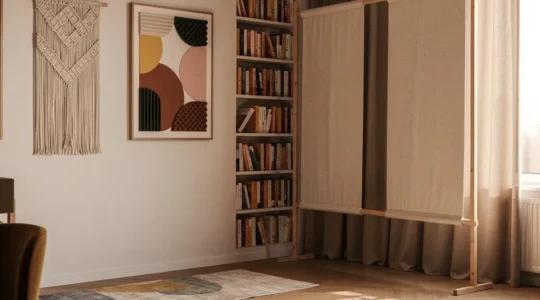
How to Soundproof Your Apartment Against Street Noise Without Major Construction?
Contrary to popular belief, foam panels and blackout curtains are not effective solutions for blocking street noise; true soundproofing relies on adding mass and sealing air leaks. Airborne noise from traffic travels through the smallest gaps, rendering even double-glazed windows…
Read more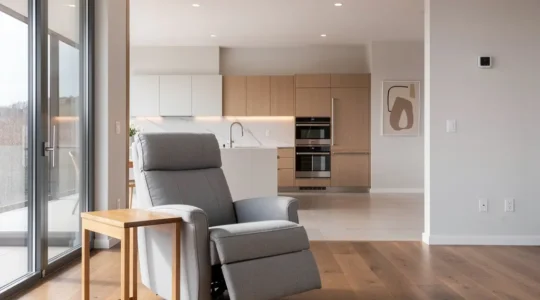
How to Renovate a Home for Aging Parents Without Making It Look Like a Hospital?
The greatest challenge in adapting a home for aging parents is the fear of creating a cold, clinical environment. The solution lies not in adding medical devices, but in seamlessly integrating universal design principles. This approach focuses on making safety…
Read more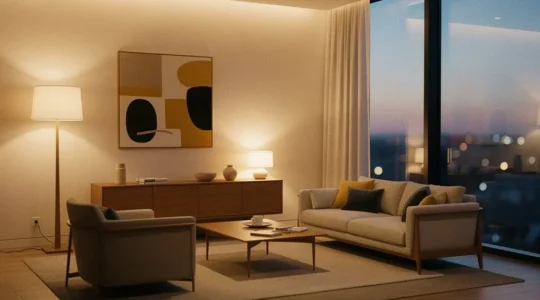
Smart Lighting Scenes: A Home Integrator’s Guide to Better Sleep and Energy Savings
Effective smart lighting isn’t about buying cool bulbs; it’s about building a coherent ecosystem from the network up. Network stability (Zigbee vs. Wi-Fi) is the non-negotiable foundation for a reliable system. Programming for wellness is a science based on circadian…
Read more
How to Insulate Your Home with Hemp and Wool for Superior Thermal Regulation and Health
The real benefit of natural insulation isn’t just being “green”; it’s its ability to create a dynamic, breathable system that keeps older homes healthy and comfortable year-round. Natural fibers actively manage moisture, preventing the mold and rot common with synthetic…
Read more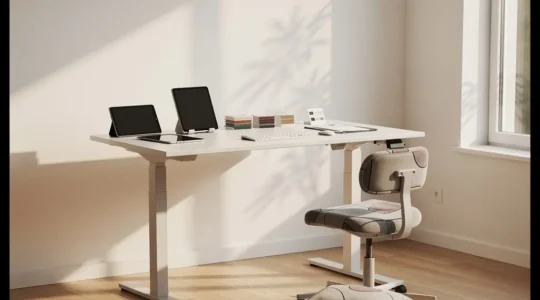
How to Adjust Your Home Office Setup to Eliminate Lower Back Pain in 30 Days?
Contrary to popular belief, sitting perfectly straight is not the solution to back pain; in fact, it often makes it worse. This 30-day plan is based on a core clinical principle: your body thrives on dynamic movement, not rigid posture….
Read more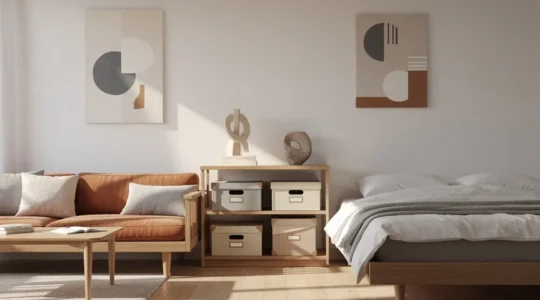
How to Arrange a 400 Sq Ft Apartment to Reduce Daily Stress Levels?
The key to a stress-free small apartment isn’t making it look bigger, but designing it to function as a psychological sanctuary that calms your nervous system. Visual clutter directly elevates stress hormones; strategically hiding items is more effective than constant…
Read more